Careers in Dance – There is More to Dance then Being a Performer

11412211_10100594299141981_7579294585861180014_n (2)Recently at a baby shower, my college friends and I were reminiscing about the past, the choices we have made after college, and where the future is headed.  In life everyone makes choices and it is a rarity that everyone can have it all.  A college dance friend is currently seven months pregnant, another dance friend is getting married this fall, and I have aged one more year closer to thirty.  Do I believe that you can create your own destiny?  Absolutely, but anyone who is successful will explain the sacrifice they had to go through to get there, and as a performer there is a lot of sacrifice.  As a performer you could be struggling in a big city like Los Angeles or New York working from stipend to stipend or contract to contract.  Performers are also working multiple jobs like bartendering, serving, or being a hostess, but there is more potential in the dance field than just being a performer.

First you could become an instructor. At dance studios, a person with extensive dance training can command $15-$30 an hour depending on if you are living in a big city or a small town.  There are also opportunities to teach at high school and college levels, but teaching at either level requires you to have a masters in dance education as well as specific certification.  If you have an extensive performance background this might get over looked at certain colleges if you decide to teach at the college level.

Besides teaching, you could go the health route.  Get certified in Yoga, personal training, Pilates, or massage therapy.  These jobs will allow you to work and coach athletes such as dancers in their cross training endeavors to keep their bodies up to par during their performance years.  A few friends of mine are doing both, still performing as well as doing some health related job so they can make money and live in the expensive room that they are renting for $1200/ month in NYC.

Finally, there is arts administration. Granted you can get a masters degree in arts administration, which I have, but if this is a field that you want to get into there are ways around getting a masters degree. For example, I did an internship in communications and development at a small organization of two people called the Natasha Trifian’s Performance Group in NYC before I was hired at another company as the Assistant to the School Director.  From there I moved up in the organization and eventually moved to another organization when I stepped into a new city. With arts administration you can also go the for-profit/ commercial route working at talent agencies, booking agencies, publicists, and performing arts center presenters.

If you haven’t figured it out the possibilities are endless. Limiting yourself as only a performer can be career ending.  Think ahead, and know that with the right moves, a good head on your shoulders, and some drive you are already ahead of 80% of the general population.
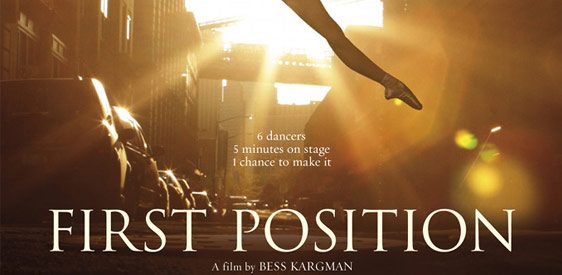
Film Review: First Position

FirstPositionThe Youth American Grand Prix is the world’s largest ballet competition that awards full scholarships and job contracts to dancers ages 9-19. Each year over 5,000 dancers enter the Youth American Grand Prix semi-finals held in 15 cities around the world. Only a few hundred dancers make it to the finals in New York City. On the final day at the end of the competition 30 elite Ballet institutions awards scholarships, contracts, and medals to the most promising dancers.

Now, I know I am a little late joining the party since this film came out in 2012 but, First Position shows the dedication, determination, and pressures that young dancers face during their training. This documentary follows six dancers on their journey to the Youth American Grand Prix and some them have technique and talent that I have never seen at such a young age. Aran, 11, is by far my favorite in this documentary. He is a military kid who travels two hours to Rome, Italy for the best Ballet training at La Masion de la Danse. Being a boy, he faces the pressures of society and his peers with being a male Ballet dancer. He has coped with it by ignoring it because Ballet is something that he loves. The stereotype that Aran continues to fight doesn’t surprise me because most boys who get teased for it drop out of ballet by Jr. High School. Miko, 12 & Rebecca, 17 talks about how there friends don’t understand the disciple that is needed to be a ballet dancer. Besides going to school they have cross training, many dance classes, and rehearsals everyday to stay in peak performance form. Joan, 16 moved away from his family from Colombia to New York City to train and didn’t know the language at first.

The amount of sacrifice these children have for the love of dance is something to admire. Few people find their calling in life and even fewer people are willing to do what is necessary to reach success. Miko switched to home-schooling so she could spend more time at the studio. Micheala, 14 was suffering an inflammation of tendentious in her Achilles heel during the finals of the Prix. These kids are not the only ones who have to put in a tremendous amount of effort, the parents have to be just as supportive and dedicated as the students. The parents assist with costumes being dyed, created, and purchased. They pay for the lessons, private coaching, and transportation to and from the studios. And they are the rock when there is a mess up on stage and all you want to do is have a pity party and beat yourself up. I think Miko’s mother said it best, “When bad things happen on stage that is my fault, when good things happen that is all her.”

The documentary shows how a student’s dance that they have practice a hundred times can not go as well on stage as it did in the studio. Falls, stage fright, or a mis-step can throw off your whole piece and can take you out of the running for recognition. Then you have to start back at square one; proving yourself. Everyone that isn’t a dancer is probably asking themselves why do these kids put themselves through this? It’s hard to explain, but I best thought process is have you ever wanted something so bad that you would do anything to get it? That’s these kids. I don’t want to spoil anything so if you want to see what happens to the ballet journey of Miko, Rebecca, Michaela, Joan, and Aran I suggest you watch First Position. This documentary takes you backstage into a world of strength, heartbreak, and dedication of kids who are beyond their years.

Watch the documentary now on Netflix.  Click Here for the trailer.

Tiler Peck – Destined to be a NYCB Ballerina

Tiler Peck’s story is like a movie. She is from Bakersfield, California and got her start dancing when she was young at her mother’s dance studio. Jazz technique was her favorite, but her mother encourage her to have a strong ballet base. At seven she began to take private classes with Bolshoi ballerina Alla Khaniashvili. Soon after, she began ballet classes in Santa Monica at Westside School of Ballet from former New York City Ballet (NYCB) principal Yvonne Mounsey and with other NYCB alum Colleen and Patricia Neary. She continued to do other performing arts activities such as acting and singing as a child, and with the help of her agent, Victoria Morris, Peck was also able to advance her career. Some of these career pushing activities included movies (I.e. Donny Darko, A Time for Dancing, and Geppetto), ballet performances such as Clara (en Pointe) in the the Radio City Spectacular at Universal Studios at ten, and Broadway in NYC at 11 in the revival of The Music Man. At thirteen her mentors, and NYCB alumni encouraged her to apply to the School of American Ballet. She was accepted and began her studies in NYC for two summers before moving to New York to study Ballet full-time. At New York City Ballet, one of the most prestigious ballet companies in the world, she moved up the ranks quickly. In 2004 she joined as an apprentice. In 2005 as apart of the corp. In 2006 she was promoted to soloist. Finally, in 2009 she was moved up to a principal where continues to be today.  (All date and background information found through Dance Magazine’s “The Magnetic Tiler Peck” by Astrida Woods)

Her artistry in her dancing is breathe taking. Peck loses herself on stage in a work and has developed a musicality that is revered. She makes every port de bra, every pirouette, and each arabesque look natural and unhurried. Her presence within pieces such as Christopher Wheeldon’s Carousal or the Romantic duet in Jerome Robbin’s Fancy Free is storytelling that can make any ballet hater want to go see another. Peck’s story isn’t all sunshine and roses. Just like any artist she has had successes as well as set backs. In 2007, at eighteen, she broke her back and was out for six months. That kind of injury, and that length of time being out can be career ending. The loss of technique, flexibility, and the competition of up and coming ballerinas can put many injured dancers at a crossroad where they need to retire. Peck persevered, healed, and became more flexible, a stronger dancer, and developed a thought process of potential plans after dancing.

In the performing arts world there has been exploration among artists who continue to push boundaries as not only an artist, but continue to develop new ways to increase revenue streams and become more of a public face. In music you see artists crossing genres like Taylor Swift going from Country to Pop or even switching performing art styles like Kiesza going from being a professional dancer to a singer. In dance, it’s becoming more prevalent for professional ballet dancers to do other activities outside of their company contract. In Peck’s case she recently had the lead role in a new musical performed at the Kennedy Center called Little Dancer as well as did a six week run on Broadway with On The Town. Peck isn’t the only one in the ballet world doing cross over work. Other artists such as Robert Fairchild (led of Wheeldon’s Broadway Musical An American in Paris) and Megan Fairchild (On The Town). It doesn’t stop there either. Just like musical acts, they are starting to cash in on branding, like Peck with Body Wrappers Apparel, Misty Copland with under armor, and Lauren Froderman with Gatorade.  These crossovers are exciting because Ballet and dance in general is becoming more popular in society and not just looked as an elite art form.

If you look at Peck story it seemed that she was destined to be at NYCB. Her story also gives you insight on how a successful Ballerina gets to the top and understanding that sacrifice as a child is where it starts. Peck didn’t have a normal life. She pushed boundaries by being involved in all walks of the performing arts, left home at a young age, and had developed an understanding that she is not going to be a ballerina forever. For now, I look forward to continuing to see her breath taking performances around the world, as well as being a role model for mini ballerinas to look to for strength, guidance, and an understanding of the dance world.

Below you will find Tiler Peck’s insight and dancing on Balanchine’s TSCHAIKOVSKY PAS DE DEUX

Dance Studios – Choosing the Right One

Every dancer has a teacher that has inspired them to dance. From the time I was five years old to high school graduation at eighteen, I had gone to the same dance studio one town over. I had two teachers, who were mother and daughter that instilled my love of dance. Mary Carrow (daughter) and Joan Condlin’s (mother). Liverpool School of Dance was my second home. When I got into high school I was pretty much there every day of the week either taking class or helping as a teacher’s assistant.

Mary was the ballet, lyrical and jazz instructor. She had a grace to her that when she turned she could make it look easy and stop on a dime without any kind wobble. She had a knack for making dance patterns and phrases complicated, but they always looked beautiful on stage by intertwining dancers, developing levels and canons, and speed changes that brought in an audience. Joan had knowledge of tap that could rival anyone. She had been trained by the infamous Al Gilbert (professional tapper and choreographer). Lisa Henson was my lyrical solo instructor who believed I had a real talent and supported me where ever I was performing. We performed at dance competitions, traveled and participated in dance workshops, and developed a team orientated mentality with the other students I danced with in class.

So how do you know the studio you chose for your child is the right one? Firstly, I think a lot of parents push their kids into dance because they want a dream for them that they didn’t have as a child. At least these are a lot of the stories I hear from parents being a dance teacher. I think you as a parent need to first figure out if this is a commitment your child wants to make. Kids know what they like and have a lot more brain power then adults give them credit. Next comes the hard part – the research.

In small towns or big cities you would be surprised how many dance studios there are in thirty mile radius. I cannot stress this enough. Do your research. Check out the websites of the studios. See what kind of experience the instructors have that will be teaching your child not only currently, but as they get older. Go check out a class. In many cases studios will have open houses where instructors will be teaching classes throughout the day, you can meet and talk with the studios and faculty, and you have the ability to view the venue. These are all important aspects to consider when choosing a studio location.

Finally, every studio that you view is going to be expensive and it is a year commitment for not only the child but the parents. Unlike classes at a YMCA or a Boys and Girls Club where the sessions are ten or twelve weeks long, studio classes run from September until June. There are perks to being in a studio instead of a community facility, like consistency of the same children in class so the kids can form friendships, there is a recital at the end of the year along with various viewing days in class, and the student also begins to feel comfortable being with instructors they know and a facility that doesn’t change.

Finding a dance family that fits the needs of your family is important and that dance family can be a support system if your child decide to go to college for dance or make a decision to dance professionally. Also, know that if anything happens tragic or happy in your life that dance family will be there to help you pick up the pieces or join in the celebration. Either way it is important for you as a parent to do your research in the beginning.

The Importance of Mentors in the Performing Arts

mentorYou can’t make it in this world alone, and the more mentors, supporters, and trustworthy people by your side the more success will follow. In every stage of my life I have had people to look up to and strive to be like. When your kid, those people are your parents (who will always be you biggest cheerleaders and mentors), but as you get older, develop interests, those role models become people in your field.

In undergraduate school I had so many teachers that I could look to in the dance world for guidance, but there was one professor that stood out, Bill Evans. He wasn’t only an internationally known choreographer, dancer, and teacher, but he was someone who truly believed in his students, worked with them on their weakness, pushed them to be better whether it was technique or rep classes or even performances. He taught his students to dig deeper, be more then what people saw on stage, and to never put bounders on yourself. He believed that I could make it in the dance world and was there to support me when I decided I wanted to go to graduate school.

Another mentor I had was the person who gave me my first real job after college, Natalie Rogers-Cropper. You may recall me talking about her in my post ‘My First Job at a Dance Company.’ Natalie was the best mentor a recent dancer graduate could have since she was a graduate of Juilliard, dance professionally all over the world, and was/ is the Assistant Rehearsal Director and the Director of Garth Fagan Dance School. When she hired me she took a strong interest in my life and job goals. At the time, I wanted to start my own dance company so she helped provide me with the tools to connect me closer with the Company by working with the development and marketing departments, as well as allowed me to take classes at the school for free during the year and during the intensive summer program. She helped me strive at the company, pushed me to new levels, and when I was ready to move to my next level by going to graduate school she supported that as well by providing recommendations.

Being out of the dance world for the last few years (besides teaching ballet) showed me that I still need to be apart of it in someway. Now that my dreams have grown, and my interests have led me towards artist relations and tour organization and management, I have spent the last three years understanding how working with multiple types of artists at various career levels, as well as with various programming departments.  It is important to have a team that can be trustworthy and have your back. So, how do you find these people and know they are the right fit for you? I think it is about intuition. When I went to college, I did research and looked at the instructors. When I applied for an internship at Garth Fagan Dance I had my own reasons and goals for applying.  In both cases getting accepted into college and getting hired as an employee the organization had their reason for taking me on as a challenge.  Knowing where you stand with people and where they stand with you is important with any kind of relationship if there is going to be trust.  With that trust, a bond is form, and those kind of people become the most important people in your life because they help to pave a path for you to succeed.

Interested in finding out more about Natalie Rogers-Cropper or Bill Evans?  Click on the name links!