The Ramones – 40 Years of Punk Rock & the Blitzkrieg Bop

The Ramones Album Cover - 1976

The Ramones Album Cover – 1976

The Ramones are legendary!  Formed in New York City in 1974 where they received limited commercial success.  Joey (lead singer), Johnny (guitarist), Dee Dee (bassist), and Tommy (drummer) were major influences on the Punk Movement in the 1970s in both the United States and United Kingdom.  In 1974 the band was formed. The Ramones had their first performance on March 30, 1974 at Performance Studios.  The Ramones had timing and luck on their side as a new music (punk rock) scene was emerging in Manhattan at two clubs – Max’s Kansas City and CBGB’s.  CBGB’s is known for the birth of punk rock and if the walls of that club could talk we would hear the stories of the B-52’s, Joan Jett and the Blackhearts, Blondie, and the Ramones.

In 1975 the band was signed to a deal with Sire Records by Seymour Stein.  The band was unique with songs built on rhythms and guitar riffs that makes the audience want to jump up and down as well as the lack of lyrical complications it was easy to just fall into the music.  The 70s become the age of music segregation – the hippy music that was all about the lyrics and the punk rock scene that was all about the rhythms, riffs, and bass beats.

The Ramones at CBGB in NYC

The Ramones at CBGB in NYC

The Ramones recorded their debut album which was released in April 1976 with a list of fourteen songs.  Dee Dee Ramone was the primary songwriter, even though credit was given to the whole band.  The album was produced by Craig Leon and Tommy Ramone with a low budget of $6,400.  When I saw that number I was in shock.  Try making a record that has the impact the Ramones have I would say you are crazy, but today I think there are more capabilities to make a cheap record than there were in the 1970s.  Today, you have computers that can be used to record and mix an entire album and release it, while back in the day you needed monstrous equipment to even develop and create a song; let alone a manufacturing company that had the ability to make physical records to be sold.

The band received glowing reviews from rock critics everywhere for the album “Ramones”:

Paul Nelson of Rolling Stones Magazine said, “Constructed almost entirely of rhythm tracks of an exhilarating intensity rock n’ roll has not experienced since its early day.”

Robert Christgau of the Village Voice said, “I love this record…For me it blows everything else off the radio.”

Unfortunately, even though they received love from every critic that listened, they did not receive the same welcoming by the public.  The album only reached 111 on the Billboard charts and the two singles “Blitzkrieg Bop” and “I Wanna Be Your Boyfriend” never charted.  Now, “Blitzkrieg Bop” is one of their most recognized songs with guitar riffs that repeat, drums beats that carry the lyrics, and rhythms that makes the awkward kid in me just want to bounce.

“Hey ho, let’s go
Hey ho, let’s go

They’re forming in a straight line
They’re going through a tight wind
The kids are losing their minds
The Blitzkrieg Bop

They’re piling in the back seat
They’re generating steam heat
Pulsating to the back beat
The Blitzkrieg Bop.

Hey ho, let’s go
Shoot’em in the back now
What they want, I don’t know
They’re all reved up and ready to go”

It wasn’t until a brief tour in England in July 1976 when they began to gain popularity.  The Ramones performed 2,263 concerts and toured non-stop for 22 years.  In 1996 the band disbanded due to a slew of problems with various band members including drugs, drinking, OCD, and bipolar disorder.  In 2002 they were inducted into the Rock N’ Roll Hall of Fame while in 2011 they received the Grammy Lifetime Achievement Award.  By 2014 all of the original band members had passed away and all we have left now is their legacy and the punk rock music that started it all.  In April 2016 we celebrate 40 years of the Ramones giving the public music that made head banging appropriate in the car to lyrics you could never understand.

Click here for the album that started it all!

14 Songs: 4 Minutes Can Change Everything

Three things you can never recover in life – the word after it is said, the moment after it is missed, and the time after it is gone.  We dwell on missed opportunities, on the choices we’ve made, and on the emotions we feel everyday like over-thinking our actions is going to change what we would have done.  Thomas Edison said, “Time is really the only capital that any human being has, and the only thing he can’t afford to lose.”  Each minute that passes by is another minute lost when we could have been productive, could have been spending it with someone we love, could have been doing something to affect change.  Four minutes can feel like an eternity, or it can feel like the speed of light.  Many songs that we encounter in our lifetime are less than four minutes.  It can change our mood, it can make us recall a memory, or it can be a moment in time where we stop and question a thought, emotion, or an action.

“We watch the season pull up its own stakes
And catch the last weekend of the last week
Before the gold and the glimmer have been replaced,
Another sun soaked season fades away” –Stolen (Dashboard Confessional)

So what’s in a song that makes our brains turn upside down?  Is it the music?  The lyrics?  A combination of the two?  Why do we gravitate towards certain music genres and not others?  As a music lover I love listening to everything – from Rap to Bubblegum pop, but this post is more about the lyrics of the songs that I have chosen in this playlist.  They are all poem-like where there seems to be a deeper meaning behind each one.  Some are tied to movies, some can give you the strength to begin again the next day, and some make you feel like there is someone out there that is meant to be your other half.  Running makes you think a lot when you are not gasping for air trying to get to the next block.  During each song on my playlist I have learn to fall into the music instead of fighting against my own body and totally giving up; pushing to the next street.

“There’s a block on the edge of this town no one talks about
Where the train doesn’t stop and the kids know they’re not getting out
You live in the loop, the smokes on the stoop
Counting the coins you got
You work at a bar where all that you are is everything you’re not
Someone tell me when
I can start again
And rewrite this story
How long can I stay
Lost without a way to rewrite
I wish I could rewrite this story” –Rewrite This Story (Smash Cast)

Four minutes can change everything – meeting someone that connects with you beyond your looks, losing someone that meant everything to you, or closing your eyes and imagining that life can be a better place with just a little bit of understanding.  A four minute song can bring you closer to understand all the emotions that happen inside.  The ones that you are not ready to talk to about with anyone; not even the ones closest to.  These words can make you feel better even if it is just a good cry that you never knew you needed.

“No hesitation now she gets up and walks
She thinks of all the pain and pride that it cost
She empties all the tip jars and won’t get back what she lost” –Best Fake Smile (James Bay)

“Your time is limited, so don’t waste it living someone else’s life.  Don’t be trapped by dogma – which is loving with the results of other people’s thinking.  Don’t let the noise of other opinions drown out your own inner voice.  And most important, have the courage to follow your heart and intuition.  They somehow already know what you truly want to become.  Everything else is secondary” (Steve Jobs).  Emotions are a funny thing.  They make us act before truly thinking and sometimes that can be a good thing because it doesn’t allow us to over-think.  Fall into the music and let it carry your thought process even if it is for only four minutes.

Click here for the playlist!

Justin Peck: A Choreography Role Model for the Millennial Generation

imageBeing a dancer takes sacrifice, while being a choreographer takes vulnerability.  The documentary “Ballet 422” explores the development of twenty-five year old Justin Peck’s ballet creation “Paz de La Jolla.”  In 2013, within two months, he set New York City Ballet’s 422nd creation to a musical composition from 1935 by Bohuslav Martinu.  The ballet featured three company elite principal dancers (Tiler Peck, Sterling Hyltin, and Amar Ramasar) along with a 15-member corps.  Peck explores a contemporary ballet style with constant fluidity and directional changes.  His style, movement quality, and confidence reminds me of Jerome Robbins’ work where he intertwines movement within a story while bringing the audience deeper into the musicality of the composition.  Peck uses every beat from the quick sound of the violins to the strong brass blows that brings the piece of music truly alive.  His attention to detail and specifics from hand placement to body angles for a lift shows his ability to create strong work like Balanchine.

Peck had a modest start in dance training in tap at age 9.  It wasn’t until he was 13 years old that he started training in Ballet after he saw an American Ballet Theater performance of “Giselle” that inspired him.  At 15, he moved to New York City to study at the School of American Ballet where he ultimately joined the New York City Ballet as an apprentice in 2006 at 18.  From there, Peck rose through the ranks.  In 2007, he became a member of the corps, and as he continued to choreograph and dance his career flourished, and in 2013 he received the title of soloist.

As a choreographer, Peck produced his first Ballet in 2008.  He found success in the Company’s Choreographic Institute.  In 2013, when the documentary was created, he was commissioned to create the only new Ballet of that year for the winter season at 25 years old.  Now at 28, Justin Peck is a soloist at the New York City Ballet and has become one of the most requested choreographers in the Ballet world.  In 2014, he was appointed Resident Choreographer of the NYCB; only the second person in the history of the NYCB’s 68 year institution to hold such a title.  Peck has choreographed 25 works for companies all over the world such as San Francisco Ballet, Pacific Northwest Ballet, Miami City Ballet, LA DanceProject, and the Paris Opera Ballet. His choreographic work – “Rodeo: Four Dance Episodes” was award in 2015 with a Bessie for outstanding production.  His focus for the work was about finding a balance between athletics and artistry.  It was primarily an all male cast with men partnering men. It explored that aspect of the men being the center of attention instead of the women, which was a refreshing view considering other Ballet casting structure.

The documentary “Ballet 422” brought the audience into a behind the scenes peek at a young choreographer as his career was beginning to explode.  Unlike most documentary, there was no interviews with any of the members of the production.  The viewer saw the the blood, sweat, and tears that went into “Paz de la Jolla” without verbal interjection.  Seeing Peck develop the work through movement studies in the studio alone as he sketched out formations and movement phrases showed that artists truly need time away from others to be creative.  Many artists are all about control, but Peck seemed to understand that it is important to let others interject in the creative process as it makes the work better as a whole from the costume designers to the dancers.  He seems to have an open forum for the people he works with that makes him approachable as the work is developed in a collaborative atmosphere.

Justin Peck is a forward thinker. Someone who thinks outside the box as a choreographer, dancer, and collaborator, which makes him push the boundaries as an artist.  Mikhail Baryshnikov said, “I found that dance, music, and literature is how I made sense of the world…it pushed me to think of things bigger than life’s daily routines…to think beyond what is immediate or convenient.”  Watching the end of the documentary as you see Peck walk away and preparing to dance after watching his piece on stage, I imagine that the wheels never stop turning for someone who is multi-talented from development to artistic you need consistent evolution.

http://www.youtube.com/watch?v=KqPDiyXjTbc

It’s Time To Figure Me Out – The Summer Set’s Best New Song

When you’re a kid, your dreams are endless as you’re told by adults that you can do anything.  When you become an adult, that constant push to dream is squashed by the reality of bills, trying to keep up with the “it” people, and viewing your friends lives through social media as it seems more glamorous than your own.  The Summer Set will be releasing their first album in more than three years.  For the run of their fourth full-length album (Stories For Monday) they have released a few singles with one of them being a song called “Figure Me Out.”  It’s a song about reflection.  Coming to an epiphany moment where you stop listening to everyone around you and you can finally see things clearly.  Getting to that moment is difficult, because it means you have hit rock bottom.  Rock bottom is where your thoughts truly fall into place, and it can come in more forms – financial, death, family disfunction, or job frustration; like a boiling point about to blow.  One of the lines in the song says:

“Son don’t stop chasing great, and keep pounding the pavement
So, I’d much rather die tryin’ to make something sacred than live as another YouTube sensation.”

As an adult you hope that the choices you make are eventually going to lead you where you want to be.  For the last ten years I have moved from city to city, job to job looking for something, but have never truly found it.  At this point I don’t know if I even remember what I’m looking for in this world.  Security.  Family.  Friends.  To make a difference at something I love.  To Change someone’s world for the better.  Maybe it’s a little of all of the above, but getting to the point in your life where your imprint is worth more than fortune or fame is something that not everyone achieves.  Another person passed away in my graduating high school class and it got me thinking that nothing is worth your time unless you’re happy.  I mean truly happy.  Not the facade that everyone sees via social media.

“I’m too pop for the punk kids, but I’m too punk for the pop kids
I don’t know just where I fit in cause when I open my mouth I know nobody’s listenin’
In the words of profit who still can’t turn a profit
Cause I don’t fit in with the in crowd, but I’m too Hollywood to go back to my hometown
Cause they think that I’m famous when I know I’m a fraud
Who got too fucked up on the finer things to remember who he forgot
But I believe there’s more to life than all my problems maybe there’s still hope for me to start again…”

We get caught up in what people think.  Their judgements become how we live our lives.  How many likes did you get on Instagram or Facebook?  Does it really matter if some likes the picture you shared, or asked you what’s wrong from your sad status.  Of course it matters, because humans thrive on acceptance.  Should it matter?  I don’t know.  I know that if a friend from the past reached out I would be there for whatever they needed.  I know if someone I barely know wants to talk something out with an unbiased party I would listen.  I know that life hands us situations that we question if we can handle and we are surprised every time we get through it.

Mark Twain once said, “The two most important days in your life are the day you were born and the day you find out why.”  So, why is it so difficult to find out that second most important question?  We dwell and fester on the past, the choices we make, but we never consider the fact that hindsight is 20/20.  That the other decision might not have been better.  Living in the now is important, but learning from the past can be a powerful tool.  Learn from yourself, learn from history, and learn from the people around you everyday.  Continue to do what is best for you and fight to make a difference in more than just your pocketbook or your next status update. And Brian Logan Dales know that this song has given me hope in one of the most frustrating moments in my life, and that it is time to figure me out.

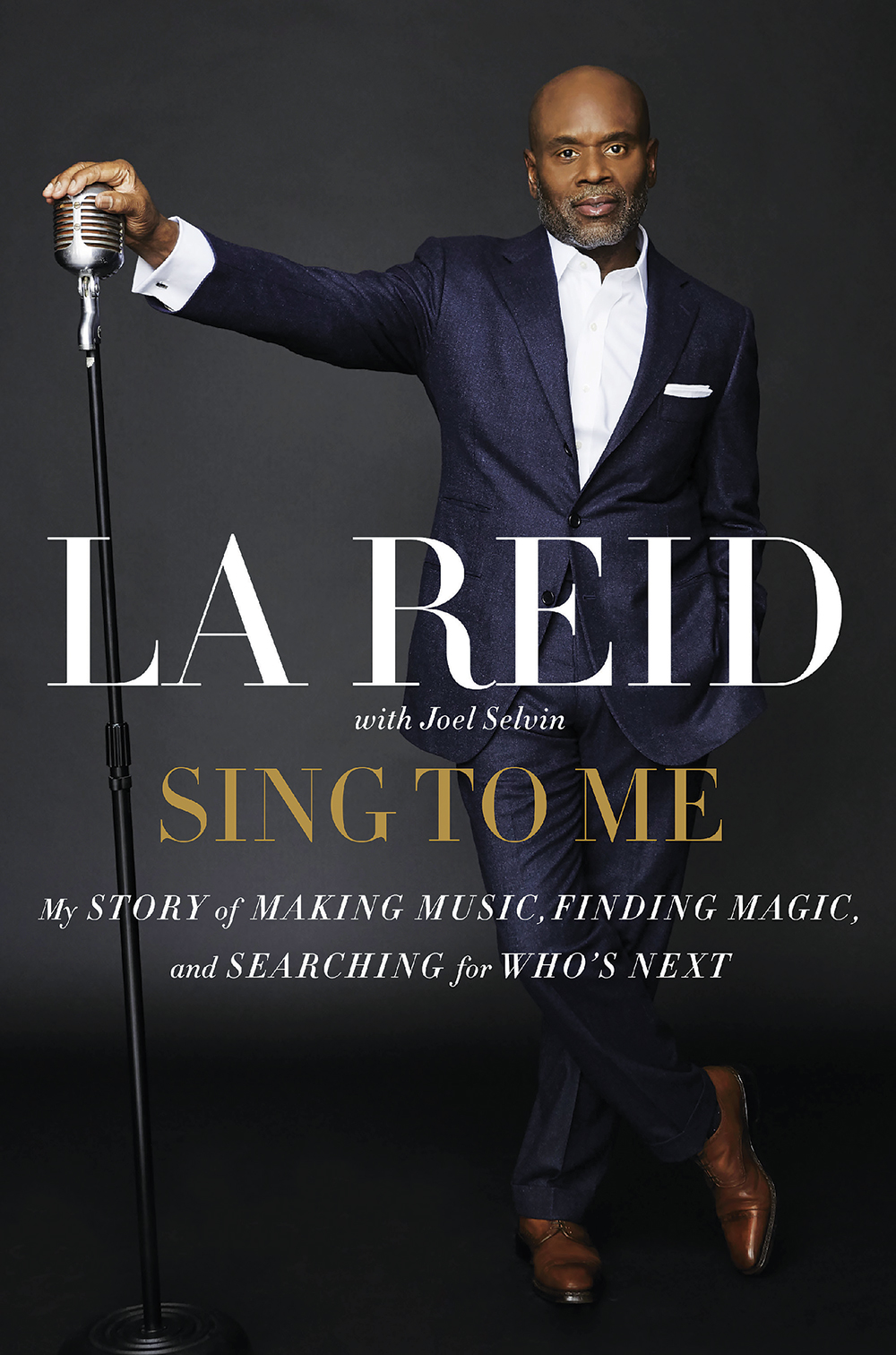
Book Review: Sing To Me L.A. Reid

la-reid-sing-to-me-book-2016-billboard-1000Being employed in the entertainment industry, “Sing To Me” by L.A. Reid was eye opening.  It serves as a story of vision full of failure, success, friendship, and words of wisdom that can guide you through the turmoil of being apart of the performing art world.  The last line in the book said, “I always wanted to be surrounded by the people who were cutting-edge, people who were making what I call aspirational music, people who really didn’t care to be regular.  They didn’t want to fit in.  They always wanted to stand out.”

L.A. Reid created something from nothing.  He realized his talents as a producer and a music business professional through his love of the drums.  His focus and articulation in a passion that developed as a child and nurtured by his family turned him into some who truly cared about the art of music and the artists he helped bring to the top such as Usher, Meghan Trainer, TLC, Toni Baxton, and Rihanna.  I feel connected to him in some weird way.  Granted we grew up in different households and families, but something about his path and journey makes me feel that there is hope for anyone who has a dream and is willing to work hard to achieve it.  Music business man Dick Griffy once said to Reid, “Yoh can make more money by accident in Los Angeles than you can on purpose in Cincinnati.”  People have a tendency to stay with what is familiar.  What is safe.  Never leaving their hometown.  Always contained in a bubble.  Reid forced himself to constantly break out of that bubble from moving to Los Angeles to Atlanta to New York.  Pushing the boundaries everyday with music and moving to new cities to expand his horizons.

Fear can be a weakness, but it can also be a driving force to succeed.  When something bad happens it can paralyze you.  It can stop you in your tracks to the point where all you want to do is lay in bed and shut out the world.  When Reid’s friend Shakir suffered a tragic death via suicide Reid said, “I had to find the strength to do what I love.  I had to pick myself up and get back to work…I knew the road ahead would be much tougher and more complex than anything I’d encounter before.”  Finding the strength to move on and not constantly harp on what you could have done differently.  Thoughts of what you could have done to change it can be a difficult emotion to fight, but in the end, it’s about letting go of the pain and the anger.

We are all looking to make a difference in this world.  To make our actions something of consequence.  L.A. Reid continues to produce and support artists – “to make music that is important, to move people for a higher power.”  His biography is just the beginning of his story and it is far from over.  If you are looking to learn the inner workings of the industry this book isn’t for you, but if you are interested in learning one man’s journey to music business, discovering talent, and finding his way; don’t be afraid to take a peak.

To purchase the book through Amazon – Click Here!