Dance Marketing – How to Make A Photo Special

Photo by Haze Kware

Photo by Haze Kware

People say a picture is worth a thousand words, but in dance, a picture is worth a billion words. Dance photographs can make or break a marketing campaign for any dance company. There are three things that are key – a photographer, good lighting, and dancers who can take direction well.

First, you have the photographer. It is important to have a photographer who is great at capturing action shots. When looking

Photo by Rachel Neville

Photo by Rachel Neville

through their portfolio look for shots of music concerts, sporting events, or even dance. Photographers who are famous for modeling shots or stills may not understand how to shoot movement, which could ultimately hurt your campaign in the long run when you go to layout design work for the coming season. Another thing to look for when you are hiring a photographer is variety. You don’t want a photographer who is afraid to take a risk in the art that they create. It could not only give you great pictures to choose from for the future, but give a new twist to your marketing campaign and take you in a new direction.

Secondly, you need fanatic lighting. When setting up a photo shoot you want to make sure you have all the lighting that the

Photo by Rachel Neville

Photo by Rachel Neville

photographer needs to capture the magic through the lens. Bad lighting could kill the shoot, which means your pictures could turn out dark and unusable and would put you back at square one for your marketing campaign. When you see pictures that come out too dark it is difficult to lighten it. When you try to lighten the photo it becomes grainy. Marketing campaigns need sharp photos with colors that pop. When I say pop, the colors don’t have to be neon. The colors just need to grab people’s attention. Make them take a second look. Also a graphic designer can really give you a color concept and change colors or bring other colors out within the design process.

Finally, you need dancers who take direction well. Every dancer has their own personalities. Some are meant to be choreographers, and others are meant to be the stage presence – have a look, a modeling ability, and be able to repeat a movement many times perfectly till the shot is right. It’s hard to find dancers who can take direction with not only movement, but with a presence or a facial expression.

Is a picture worth a thousand words? You decide.

Check out dance photographers Haze Kware and Rachel Neville.

Queen, Freddie Mercury, and The Imprint of Bohemian Rhapsody

Faultless sound of beauty, and ageless instrumentalists with a style that could never be replicated.  Queen will forever be a revolutionary group that changed history with their strong, powerful, and steady voices, their ability to write hit songs individually and as a group, and their support and protection they give one another as a group, individuals, and as artists is something to admire.

Queen was composed of Brian May (guitarist), Roger Taylor (drummer), John Deacon (bassist), and Freddie Mercury (pianist/ lead vocals). These four men became Queen in 1971.  In 1973, they were signed to EMI Records and Elektra Records.  In the same year, Queen released their debut album ‘Queen.’  Their debut album was hailed one of the most exciting developments ever in rock music.  It received a rave review from Rolling Stones Magazine that called them “…the first of a whole new wave of English rockers, and you’d best learn to love ’em now’ cause they’re here to stay. Regal bearings aside, Queen is a monster.”

In 1975, Queen released their second album ‘A Night at the Opera’, which was the album that brought us the classic Bohemian Rhapsody.  This unusual six minute suite was comprised of an intro, a ballad segment, an operatic passage, a hard rock part, and a reflective coda, but no chorus. May, Taylor, and Mercury sang their vocal parts ten to twelve hours a day.  A hard, fast, and strong dedication to a work that was fully penned by Mercury.  Brian May said, “Bohemian Rhapsody was Freddie’s baby…We just helped him bring it to life.”  It took three weeks to record, the opera parts took more than seventy hours to complete, and one hundred and eighty overdubs were needed to track the recording we hear today.  In an article in the New York Times the producer, Roy Thomas Baker said, “The thing that makes it most ageless is the fact that it didn’t confine to any given genre of music. It doesn’t compete with anything. It’s in a world of its own.”

The record label didn’t want to release Bohemian Rhapsody as a single unless it was shortened because they believed it wouldn’t be a hit.  The band collectively refused to shorten it because they felt it would change the work.  Can you seriously image shortening that song?  The radio DJs and listeners ended up making the song a hit and proving the record labels wrong.  British DJ Kenny Everett received a copy of the song and played it on Capital Radio.  Everett played the song fourteen times in two days due to audience demands.  I think Everett was right when he said, “…it could be a half an hour long, it’s going to be number one for centuries.”  Bohemian Rhapsody topped the United Kingdom (UK) charts for nine weeks and sold more than a million copies by 1976.  The song peaked at number nine in the United States (U.S.) in 1976, which is insanity to me!  It reached number one again in the UK in 1991 upon Mercury’s death and number two in the U.S. with the release of the film Wayne’s World.  In 2004 the song was inducted into the Grammy Hall of Fame.

Queen was full of artists that I haven’t seen in today’s industry.  They were a talented group of songwriters that all penned number one hits to their legacy.  They understood that taking a chance and truly opening yourself up to the world is a risk that can and will be rewarded if you are brave enough to let people see your vulnerable side.  Queen was inducted into the Rock ‘n’ Roll Hall of Fame in 2001, Songwriters Hall of Fame in 2003, UK Music Hall of Fame in 2004, and received a star on the Hollywood Walk of Fame in 2002.

I wonder what Queen would have created had Freddie Mercury not passed away in 1991.  His vocal talents extending from bass in low F to soprano in high F is rare.  His ability to pen hits like A Crazy Little Thing Called Love, Somebody to Love, Don’t Stop Me Now, We Are the Champions, and Bohemian Rhapsody leaves me in awe every time I hear them.  Mercury was the flash.  The theatrical entertainer that made the live shows an experience.  I know I’m a week late, but September 5th was Freddie Mercury’s birthday as well as the yearly tradition of ‘Freddie for a day.’  On this day, the Mercury Phoenix Trust celebrates the life of the legendary Freddie Mercury, and continues to support the ongoing mission of finding a cure for AIDS.  People dress up as Freddie all over the world to help raise funds on this day through sponsorships.  Let’s continue to remember the man and the legend on this day, and to never forget the work and artistry that these four men shared with the world through all that is Queen.

Teaching Non-Dancers to Dance

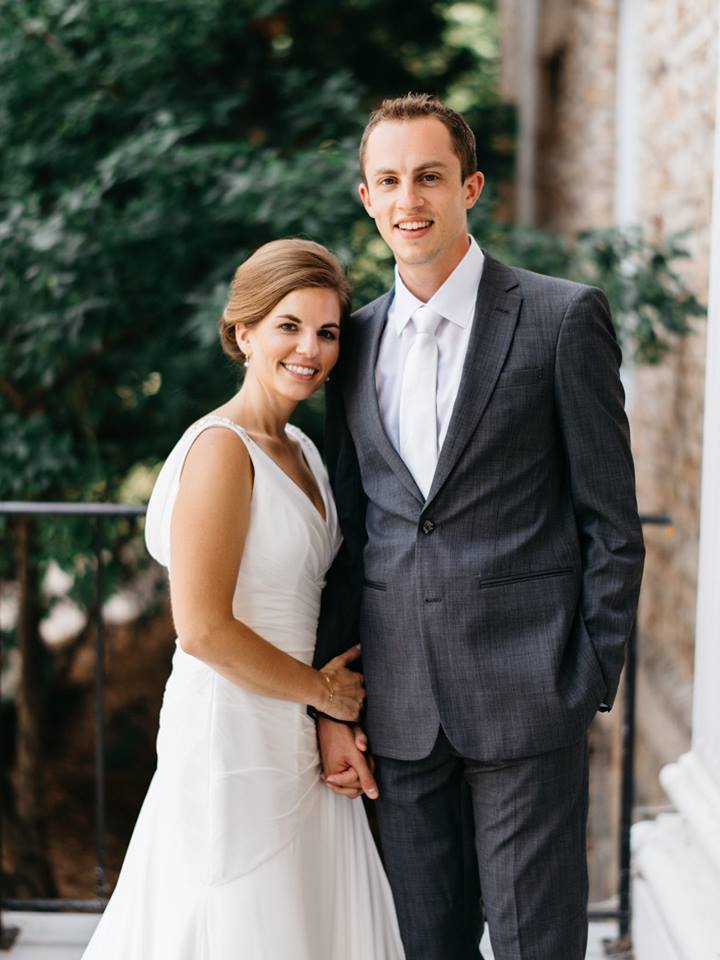
Photo Credit: Santiago Murillo Photography

Photo Credit: Santiago Murillo Photography

At the beginning of August, my friend Katie got married to her fiancé Charlie.  They are so cute together that it makes you believe that love actually exists.  For their first wedding dance, they asked me to choreograph a routine for them to Ed Sheeran’s “Thinking Out Loud.”  I was super excited, nervous, and terrified all at the same time.  I love to choreograph, but my biggest fear wasn’t choreographing the dance; it was creating a piece that they were going to be comfortable doing in a room full of people.

Needless to say I took the approach of teaching these non-dancers as I would a five year old.  This doesn’t mean that I treated them like a child.  It means that I wanted to see what they would do with only a little direction.  I started by showing them a basic step and once they would understand a step I would bring it to the next level by tying that step in with something a little more difficult.  For example, everyone knows the square box step that you did when you were at a middle school dance.  When the guy had no idea what he was doing and he kept stepping on your feet.  That step was the first step we worked on.  They mastered this very quickly, so, I started teaching them how to turn it.  From teaching Charlie how he needed to hold Katie’s back, to where each one of them had to step to make the circle turn in a specific direction.

The thought process behind choreographing their first dance was to make it flow, as well as have them change direction and throw in some tricks.  In most cases, the audience isn’t going to notice if a step has been repetited or not because they are too memorized and impressed by the awesome skills the bride and groom have come to obtain.  Throwing in some one handed spins so the bride’s dress flowed, a follow the leader sequence, and some hand connecting twists and turns can make any dance ignite into a show.

I think the most important factor teaching non-dancers to dance is how dedicated they are to learning.  Katie and Charlie were so determined to get everything I taught them perfectly in sync that we met once a week for a few hours for three weeks to learn the dance.  Once it was taught and choreographed it was up to them to perfect it without me.  They both took the initiative to practice a lot leading up to their wedding.  On their wedding weekend it seemed like every time I saw them they were telling me that they were leaving early from a gathering to go practice.  When I saw the final piece at their wedding I was so proud of the two of them that I could not contain my excitement.   As soon as it was done, I had to jump out of my chair and hug the both of them.

In the end of it all, it is not about teaching someone anything, but how hard they are willing to work to perfect it.

Road Trip Mixes are a Necessity

dancing-in-a-car-waynes-worldI’m sorry for being such a slacker last week.  I literally didn’t post anything, but I promise I have a good reason…kinda.  I moved from Boston, Massachusetts to Los Angeles, California last week.  Plus everything that could go wrong went wrong.  My older brother got into a sever car accident where he was hit head on by another car.  Both cars were totaled.  My brother is still recovering.  He has some stress fractures in his face and his left hand has been bothering him since the accident, but he is getting stronger everyday.  Driving from Boston to Syracuse, New York my breaks came loose on the right side of my car where it was making this grinding noise so that was terrifying.  And finally, the Uhaul place gave us the wrong size truck.  Instead of the seventeen foot truck that we ordered they gave us a fourteen foot truck.  From what the Uhaul company explained you only put in a “request” for a truck, it does not guarantee you that size truck which I understood, but if you are going to give the customer a different size truck wouldn’t you give them a larger one?  Needless to say, all the stuff that my parents, brother, and I had did not fit so we had to rent a trailer, which made everyone have to drive by themselves.  Thank you Uhaul!

It took four days to get to sunny LA driving from sun up to sun down every day.  I never want to drive that much again.  I don’t think the experience of being in the car is bad, but when no one is in the car with you it can be pretty boring.  Knowing that I was going to be driving alone I made some epic playlists, but I could not play said playlists because my jack in my phone stopped working on the third day of the trip.  I seriously cannot make this up.  Luckily, I didn’t have to channel surf in the car to find a music station because I have Sirius XM, but listening to one station for twelve hours you get to know the music they play because just like normal radio stations they loop songs every four hours.  So, of course I was channel surfing between the 80s, 90s, and 00s stations for the last two days.

This brings me back to my point of the importance of road mixes or as we come to know them as playlists.  The problem with playlists if you iPod doesn’t want to work or cooperate you need a back up.  Granted most CDs hold maybe two hours of music which is pushing it, but it’s better to have multiple CDs with music you know you like rather than switching channels every time the “Macarena” comes on.  Here is my note to all of you road trippers out there.  Do not depend on your iPod or iPhone to get you through a long car ride.  You need to have some CD back ups of those epic playlists because if you don’t you won’t be able to scream “Hold on,” boy band dance to “I Want It That Way,” or bang you head to”Bohemian Rhapsody” to entertain yourself from boredom.  Instead you will have to guess with the radio on what the next song is, unable to skip if you don’t like it, and most importantly you can’t really plan your next dance move while driving.  These are the important things in life.

Individual Fundraising – How To Do It

Nobody likes to talk about money, but there comes a time in everyone’s life where you need to start having those hard conversations.  Now, you can continue to avoid the dread ‘M’ word issue or you can deal with the fact that every facet of your life deals with money.  The sooner you become comfortable talking about it in everyday conversation the easier this talk is going to be.

Non-profits thrive and prosper on the development team.  This part of the organization is the area that brings in the money and makes all the wheels turn from production to education to everyday operations.  In my research to become more apart of the dance world in Los Angeles I have recently applied for a development position.  In my prep for not only furthering my career, but an overarching understanding of the arts world from commercial to nonprofits it is important to grasp knowledge and research what you still need to learn.  One of the components of this potential position includes individual fundraising, which I do not have experience in, but you have to start somewhere.  Granted I have an understanding of grant writing, fund reporting, fundraising efforts with the community, database maintenance and upkeep, and donor event planning, but I have never done anything directly with individual donors and major gifts.  So, I did what I do best which is research like a crazy person.

Started by talking with a woman who has been in the major gift and solicitation game for thirty years.  She told me that following the 10, 10, 80 rule is the most important rule.  Ten percent of funding are grants – foundations, government, corporate, ten percent are smaller funding donations from annual appeals and e-mail solicitations, but eighty percent are your major donors.  These donors need to be cultivated, courted, and become part of the company’s family.  Understanding this rule I came to the understanding that individual giving is the most important aspect in development.  Needless to say I have gained a tremendous respect for the employees that have taken on this intimidating and daunting task of approaching people for funding.

So my thought to maximizing an individual giving program is to first draw up a plan with short and long term goals that have deadlines attached to them.  For example, start by concentrating on the circles that surround the company.  Around the company you have the executives of the organization and board members.  I would want to uses these people to test the case of support to the leadership by developing the story of the company that could be presented to donors (i.e. mission, artistic work, education, community…etc).  Exciting and engaging the people that are associated with the organization so they (board and other leaders) will participate and are comfortable to participate and give one hundred percent to fundraising plan.

Once you have the leadership on board and the basic pitch it is time to get to know the database of the company.  What do your current donors have in common?  Are their relationships between the donors (i.e. friends, family, or board relation)?  Once you are able to separate your current donors into giving categories take a look at other organizations to see if their giving levels are the same or is their a potential for a higher donation that hasn’t been tapped.  Don’t solicit your donors the same.  Continue to target and ask for the right amount for the right type of area of the company to fund.  Continue to communicate to all donors through multiple channels – social media, mail, e-mail, and individualize calls and letters.

Next it is time to leverage the connections.  You know how I was talking about those circles around the organization?  Well the next circle would be friends, associates, and connections with VIPs of the company.  Enlist board support by getting their inner circle to get to know the organization by hosting a small event in a personal setting.  Educate, inform, and involve them.  Cultivate the relationship long-term.  Getting the donor to go from donation to investment in the organization is key.  You want these people to not only give money but believe strongly in the organization.  To do this you need to develop an investment opportunity, give the donor an opportunity to transform the organization or the community, and then you as the organization need to demonstrate that change.

Donor solicitation is a lot like dating.  First you get to know a person.  What are their interests?  How could their interest connect with the company’s interests?  If both of the parties (i.e. the individual and the company) interests can connect in a positive way you start a courtship with the donor.  Throughout the courtship you educate them about the company, find common interests, and get the donor to connect in a personal way.  From their comes the commitment (i.e. the proposal).  The asking for the funds from the donor and how their investment will be used.  Looking at solicitation like dating makes it a little less scary because it fits on a level that everyone can relate to in society.  The thing to remember is that money isn’t as scary to talk about it if you can find a common ground.