
Martin Kierszenbaum – The Genius Behind Cheerytree Records

cherrytreerecords“A mom and pop shop in a department store.” That is the way Feist describes Cherrytree Records. Ten years ago, Martin Kierszenbaum started Cherrytree under the Interscope-Geffen-A&M umbrella at Universal Music Group, but it was a long road getting there. His love of music began as a child. Since his mother was a piano player he began lessons at eight years old and at ten he started to learn music theory and began songwriting. From there he started bands in high school and college where he was not only writing songs, but producing and mixing their work as well as being the manager of the band that dealt with the club promotors. This allowed him to hone his skills as a negotiator at a young age as well as meet people in the industry at a personal level. Kiersenbaum is one of the few music executives I have discovered so far that has finished school.  He went to University of Michigan for his bachelors degree and University of Southern California for his Masters in Communications Management (Songwriter Universe, Dale Kawashima).

During graduate school was where his music executive climb began.  He got an internship at Wing/ Polygram Records where he eventually got a job in the mailroom.  In 1989 he was hired as a publicist in the International department at Warner Brothers Records. He spoke Spanish because he grew up in Argentina which was the tipping point that got him the job. At Warner Brothers Records he worked with artists like Madonna, Jane’s Addiction, Devo, B-52s, Prince, and Rod Stewart.  He eventually moved to A&M Records where he was a publicist that work with Sting, Sheryl Crow, and Bryan Adams. In 1998 A&M was bought out my Universal Music Group and Interscope-Geffen-A&M was born. Kierszenbaum was kept on as Head of International under Jimmy Iovine. At this level he was able to work with artists like Eminem, Vanessa Carlton, and the Black Eyed Peas.

Kierszenbaum is the best of both worlds. “His advice and mentoring come from being a musician and not purely from a business standpoint” (LATimes, Melinda Newman). Jimmy Iovine recognized this and Kiersenbaum began doing A&R work for Interscope while managing his international publicist responsibilities. His first signing was an Italian Opera singer, Alessandro Safina. Safina didn’t do well in the U.S. partly because the PBS special that was create for the artist’s coming out was released around when the September 11th attack happened. It goes to show that it is all about timing. On a positive note Safina sold 250,000 copies in Sweden so Interscope looked at as a success.

In 2005, Cherrytree Records was born. Kierszenbaum signed artists such as Lady Gaga, Far East Movement, LMFAO, Roybn, Ellie Goulding, and Tokio Hotel. In the LA Times he stated “I don’t sign things of the moment, I sign things of the moment to come.” He has a gift of signing artists that are ahead of the curve, but still can connect to the mainstream.” Let’s take Lady Gaga as an example. She was a young kid who decided to drop out of college for a music career, but she had a vision for her music. She wanted to create an identity and a brand like Prince. She was the future and Kierszenbaum knew that because he was able to connect with her on a personal level. With his publicity, musicianship, and international background he was able assist in co-writing four songs on her album (The Fame), do a 40-part series introducing Gaga to the world, as well as break her to number 1 in the Swedish market before she became big in the U.S.

I think Jimmy Iovine said it best, “His musical background gives him a feel for the records the artists want to make, and his international mindset gives him the advantage in breaking them on a worldwide level” (Hollywood Reporter, Ashley Lee). Kierszenbaum is constantly on the look out for artists who have a point of view, a distinctive voice, and an extraordinary repertoire. In 2013 he signed a band from Vancouver Canada named Marianas Trench. Led by Josh Ramsey (co-writer of Call Me Maybe), he has great musicianship, a way with words, and heart in the last three albums the band has created. I look forward to the plans that Cherrytree has for Marianas Trench and if it is anything like Gaga everybody better be on the lookout for the fireworks.

Click here for a playlist of the artists that have been and are on Cherrytree Records.
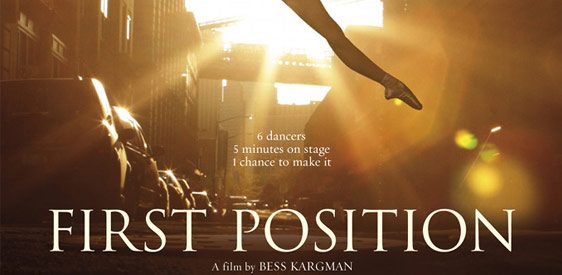
Film Review: First Position

FirstPositionThe Youth American Grand Prix is the world’s largest ballet competition that awards full scholarships and job contracts to dancers ages 9-19. Each year over 5,000 dancers enter the Youth American Grand Prix semi-finals held in 15 cities around the world. Only a few hundred dancers make it to the finals in New York City. On the final day at the end of the competition 30 elite Ballet institutions awards scholarships, contracts, and medals to the most promising dancers.

Now, I know I am a little late joining the party since this film came out in 2012 but, First Position shows the dedication, determination, and pressures that young dancers face during their training. This documentary follows six dancers on their journey to the Youth American Grand Prix and some them have technique and talent that I have never seen at such a young age. Aran, 11, is by far my favorite in this documentary. He is a military kid who travels two hours to Rome, Italy for the best Ballet training at La Masion de la Danse. Being a boy, he faces the pressures of society and his peers with being a male Ballet dancer. He has coped with it by ignoring it because Ballet is something that he loves. The stereotype that Aran continues to fight doesn’t surprise me because most boys who get teased for it drop out of ballet by Jr. High School. Miko, 12 & Rebecca, 17 talks about how there friends don’t understand the disciple that is needed to be a ballet dancer. Besides going to school they have cross training, many dance classes, and rehearsals everyday to stay in peak performance form. Joan, 16 moved away from his family from Colombia to New York City to train and didn’t know the language at first.

The amount of sacrifice these children have for the love of dance is something to admire. Few people find their calling in life and even fewer people are willing to do what is necessary to reach success. Miko switched to home-schooling so she could spend more time at the studio. Micheala, 14 was suffering an inflammation of tendentious in her Achilles heel during the finals of the Prix. These kids are not the only ones who have to put in a tremendous amount of effort, the parents have to be just as supportive and dedicated as the students. The parents assist with costumes being dyed, created, and purchased. They pay for the lessons, private coaching, and transportation to and from the studios. And they are the rock when there is a mess up on stage and all you want to do is have a pity party and beat yourself up. I think Miko’s mother said it best, “When bad things happen on stage that is my fault, when good things happen that is all her.”

The documentary shows how a student’s dance that they have practice a hundred times can not go as well on stage as it did in the studio. Falls, stage fright, or a mis-step can throw off your whole piece and can take you out of the running for recognition. Then you have to start back at square one; proving yourself. Everyone that isn’t a dancer is probably asking themselves why do these kids put themselves through this? It’s hard to explain, but I best thought process is have you ever wanted something so bad that you would do anything to get it? That’s these kids. I don’t want to spoil anything so if you want to see what happens to the ballet journey of Miko, Rebecca, Michaela, Joan, and Aran I suggest you watch First Position. This documentary takes you backstage into a world of strength, heartbreak, and dedication of kids who are beyond their years.

Watch the documentary now on Netflix.  Click Here for the trailer.

‘My Music is Better Than Yours’ – Generational Music Gaps

My mom’s favorite line when she hears the rap music my brother listens to is, “there is a reason why rap rhymes with crap.” Of course then my brother defends rap music by saying you don’t understand that there is a lot of poetry and deep lyrical thought behind the verses, then of course my mom’s rebuttal is “I still don’t like it.” I’m sure all of you out there have had this disagreement with your parents where they don’t understand why you like the music you like, but what I don’t understand is where did this music elitism stem from? Is it just the love that generations have for the time they grew up in? Is it because they had kids and didn’t really keep up with new genres that were coming up because they were driving kids to baseball practice and dance classes? Or is it because as a kid and a teenager, music speaks to you at a level when you feel like no one understands you?

I still haven’t quite figured out the answer to this question, but what I do know is that new genres and styles of music stem from the past, so why doesn’t everyone like all genres like me?  To continue with the rap music lineage, it is based around storytelling, which is the basis of every music genre in existence. Taking it one step further, this type of music is tied to other styles such as jazz, rhythm and blues, and gospel music. It is tied to the rich history of the streets of New York City and ultimately became a way of expression for the African American and Latino communities in the 1980s. Rap music started off being spoken instead of sung with strong beats, an intense rhythm, and ability to develop strong lyrics if the rapper is truly talented.

Now, I know what the baby boomer generation is thinking especially my mother – “it’s still crap.” In many cases, just like any genre, if you listen to one artists and you don’t like their music it turns you off to the entire style. TuPac is one of the greatest rappers to ever exist. His song Dear Mama is something that hits you deep in the gut when you are listening to it. It brings you back to various points of time in his life, regrets he’s had from his choices, and gives you an image to develop characters in a story like you are reading a book. My brother is obsessed with Eminem. I think Eminem is another artist who has come out of this genre strong. His songs connect to his life, and gives an insight to what he has gone through. This gives listeners the ability to feel like they are understood and connect on a more personal level. For example, Eminem’s Lose Yourself says,

“Look, if you had, one shot, or one opportunity
To seize everything you ever wanted. In one moment
Would you capture it, or just let it slip?”

How can this music be crap?  Parents, teenagers, and kids I encourage you to give one another’s generational music a chance.  Classical isn’t boring, rap isn’t crap, and pop music isn’t sub par to the rest of the styles out there.  The next time someone comes to you with new music figure out why they like it, ask questions, and develop some insight on where it came from.  History might surprise you.