Have you ever seen the music video of Sara Bareilles singing Gonna Get Over You? It is one of the happiest break up songs I have ever heard. Not only is she in the middle of the grocery store dancing and singing, but she somehow gets everyone else to join in too. Granted, at the end of the video she comes to the realization that it was all in her head and bows her head in embarrassment and shame, but it basically sets the stage for what you need to know about a dancer in public. Needless to say, when out in public with a dancer they can be extremely embarrassing to a non-dancer. They can decide to jété down a grocery isle, or if music is playing in your general vicinity expect there to be random dancing to that bass pumping beat. I can admit I’m embarrassing when I go out in public. Just ask my brother who had to deal with my random dancing when we were last in Los Angeles together. He had to deal with my bust a move mentality up and down third street in Santa Monica while street artists were getting their jam on.
So why do dancer do this? They just can’t help themselves. Imagine your whole life having various three minute sections of your life choreographed to music. Now imagine repeating these sections so many times that your brain is going to fall out. Between recitals, competition, professional performance gigs, choreographing, and charity events you have a tendency to lose your mind a little that anytime you hear music you just need to move. In some situation random dancing is appropriate like on iCarly, a concert, or a music festival because not only are their other weirdos like you, but your friends or siblings that look at you as a crazy person are now joining in on the music that actually exists. In my brother’s case, he gets the head bob going with his hands in the air like he just don’t care; there is a lot of jumping around and dancing like an idiot.
Lastly, a dancer can randomly start dancing when there is no music playing, but just so you know there is a constant soundtrack in their head. Let me tell you it never turns off. You know how I was saying that a dancer has the constant pleasure of repeating pieces or dances over and over again? Well, that carries over into other parts of their lives. For example, I become obsessed with certain songs and learn every word. Then I am singing it for a week and every time I’m singing it to myself I get in my own head, think I’m alone, start choreographing to it, and all of a sudden I can have five people looking at me in the park because they think I’m a spaz. I leave you with this. The next time you see someone dance randomly in public, I can 95% guarantee they are not crazy they just love life and want you to too. Join in on the fun and make a flash mob out of their moves or make your own and connect with someone on an artistic level by dancing it out.
TLC – four platinum albums, five Grammys, sold more than sixty-five million records, and ranked the best selling American female group of all time. Members Tionne ‘T-Boz’ Watkins, Lisa ‘Left Eye’ Lopez, and Rozonda ‘Chilli’ Thomas lit the world on fire with their R&B, Funk, Hip-Hop, Urban, and Soul sound. TLC signed with Antonio L. A. Reid at LaFace Records in ’91, and their debut album (Ooooooohhh…On the TLC Tip) was released in February ’92. The album was a critical and commercial success becoming a four time platinum album in that year. Written primarily by Lopez and producer Dallas Austin. This album led to three Top 10 singles (Ain’t 2 Proud 2 Beg, What About Your Friends, and Baby-Baby-Baby), as well as a national tour as the opening act for MC Hammer.
Their second album (CrazySexyCool) made them even bigger. With four singles that reached the top five Hot 100 (Creep, Waterfalls, Red Light Special, and Diggin’ On You), worldwide sales hitting fifteen million, Diamond Certification from RIAA, and won two Grammys in ’96. They seemed unstoppable, except life has a way of hitting you in the face. Watkins was dealing with medical bills and an illness, and Lopez had a drinking problem, domestic disputes with her then boyfriend, as well as an arrest record for arson. The Group declared chapter 11 bankruptcy in ’95. Some articles say it was the bills and problems that the girls got into while others directed it towards the expenses, fees, and royalties that the label and management team were receiving. It seemed the more money the group made the less money the group got. They were selling millions of records and performing, but after all the costs, fees, and other expenses the girls were left with $50,000 a piece after years of blood, sweat, and tears. I think the lesson here is to really understand what you are signing with management and a label, and if you don’t understand the agreement or need to negotiate bring in an entertainment lawyer.
CrazySexyCool had the hit of the summer 1995 with Waterfalls. A song that was smooth and soulful with the rap edge of Lopez. Written by Lopez, Marqueze Etheridge, and Organized Noise where it touched on subjects of illegal drugs, promiscuity, HIV/ AIDS, and death. The video was innovative, full of digital enhancements that were still new to the time, and hit real subject matter that made you think about your actions. It was not the normal summer hit that was all fun and games, but brought you to an understanding that your actions have consequences. These lyrics in the song sum up the concept:
“I say the system got you victim to your own mind
Dreams are hopeless aspirations
In hopes of comin’ true
Believe in yourself
The rest is up to me and you”
Waterfalls spent seven weeks at number one, won four MTV Video Music Awards, and introduced the world to Cee Lo Green who assisted with the backing vocals on the track along with Debra Killings. I can honestly say that when I was nine years old, I was not paying attention to the deeper metaphor. Watching MTV with my cooler older brother all I really cared about was that I got to do what the big kids do. Now I realized how important this song was to our generation. The epidemic of HIV/AIDS hit in the 80s and carried into the 90s. The drug situation with the youth is terrifying and brings to light the importance of mentors in the inner cities to get kids out of the illegal drug ring. To understand that there are better options and more opportunities than what is in front of you.
TLC dominated the charts during the 90s. They continued to make epic music like No Scrubs which was our jam in middle school! After their third album Lisa ‘Left Eye’ Lopez died in a car crash in Honduras in 2002. The group released a fourth album with some of Lopez’s raps on two of the songs, but the group made the decision to retire and never replace their sister. Now, they are on the move to make a fifth album for the fans in collaboration with their old producer Dallas Austin. Waterfalls will always one my favorite songs of the 90s. There is no doubt that the new generation of girl groups had some great role models for music. TLC was the the representation of females and excelled in a dominated boy band time and brought to light issues more than just a song about a broken heart.
Click Here and come back to the 90s with this TLC playlist. Below is the video for ‘Waterfall’.
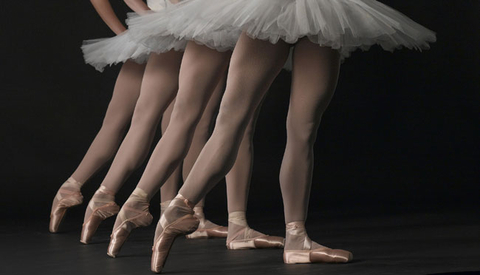
If you have ever seen the movie Center Stage you will notice a minute worth of footage where ballet dancers look like they are wrecking a pair of $80 shoes, but guess again. Let’s start with the basic ballet slipper, which is soft fabric like cotton that molds to your feet the minute you wear them for a few hours, but Pointe shoes are in no way that simple.
Getting fitted for your first pair of Pointe shoes when you are young is like a dream, because you will finally be able to do all the graceful and elegant moves and phrases that you have seen danced across the stage by older students, in film, and on stage. Let’s get real – you need to be ready to work harder than you have ever worked in your life. I’m not saying this to scar you or deter you from Ballet, but there is a reality that you need to understand to be great.
Pointe shoes are the one part that is key in your first year. It is important to go to someone who can fit you for the correct style of shoe that is necessary for your type of foot. Everyone’s feet are different. Some have incredibly high arches, others have flat feet, some have falling arches, while others have their second toe longer than the rest of their feet. These are all little nuances that you don’t think about usually buying shoes. This is why it is important to go to a shoe place that has a person who understands feet, how each style of Pointe shoe is different, and how each shoe relates to the different types of feet.
There are five things to look at when buying Pointe shoes which include the shank, vamp, box, platform, and heel. The right shoe is based on the layout of your foot and will protect the delicate parts, as well as offer support to the contours of your foot. This is extremely important to prevent pain and bunions, sinking into your shoe, and forced weight onto your big toe potentially causing injury from not being over your box properly. For example, the first two toes after my big toe are longer than the rest of my toes, and the toes eventually taper down to the smallest toe on my foot. Since my two toes are longer than the rest it causes them to stick out. In my first pair of Pointe shoes, these two toes felt a lot of pressure because I was sliding in my shoe and it was causing them to curl instead of extend. The reason I was sliding in my shoe was because the profile height of the shoe was to big and I was given the wrong box type for my foot. Be sure that you have a snug fit around the box and width part of your foot to prevent the sliding as well as the right type of box.
The vamp length is another spot I have seen dancers struggle. I was subbing as a ballet teacher and I noticed a student was not getting over her box, and on top of that she was sickled in what we were doing across the floor. When I looked at her foot the person who fitted her didn’t fit her properly. She had a shoe for a square box foot when she needed to have a tapered box (toes fall in line like a slant). The shank strength she had was too strong for her feet. She needed a pre-arched shank due to her flat feet to give her more support. Lastly, her vamp length was too long. She had short toes and an inflexible arch. With a vamp that is too long it also causes difficulty getting over your box.
Pointe shoes are a trial and error process. Your feet change as you get stronger and may need to adjust to a new type of shoe as your feet develop, but the thing I need to harp on the most is to know your body. You are the only one that can say when a shoe doesn’t feel right. Just like the girls on Center Stage they beat up their shoes to adjust them to what feels comfortable on their feet. Now I am not suggesting you do this, but as I got older I use burn the fabric on the bottom of my box and rough up the bottom of my shoe so it wasn’t so slippery. I had friends that didn’t like how stiff the box was so they would beat it up on the floor to loosen it. Needless to say, your first stop needs to be to figure out your foot. Talk to you Ballet teacher and see what they know. If you have any doubts before you go to the store check out the website below. It will teach you how to look for the right shoe for your foot. Happy Pointe Shoe Hunting!
Girl fronted bands have been blowing up in the music scene over the last few years. There is Paramore, The Pretty Reckless, Prvis, Echosmith, and now Against the Current. Recently signed to the record label Fueled By Ramen (March 2015), Against the Current (ATC) is a three piece pop-rock band that consists of Chrissy Costanza (lead vocals), Daniel Gow (guitar and vocals), and Will Ferri (drums) from Poughkeepsie, New York. Formed in the Summer of 2011 meeting through mutual friends and were originally a five piece band which also included Jeremy Rampala (guitar) and Joe Simmons (bass). Ultimately, they have grown into the badass band they are today with a more enhanced musical sound, stronger stylized lyricists, and a fan base that I have watched grow on YouTube from a little over 100,000 to over a million followers.
In an interview with Maria Sherman the band stated that they utilized YouTube as a way to build their fan base outside of playing local gigs at pizza hangouts. They were a band for about a year before ATC created their YouTube channel where they not only did covers of popular songs, but released original music. The first cover they released was Good Time (Owl City and Carly Rae Jepsen) as well as their first original Thinking. Releasing both at the same time I thought was music business genius. Fans of Owl City and Carly Rae Jepsen searching online could come across ATC’s cover as well as their original music to help gain a new audience.
For the past four years ATC has done all the business related together as a team from packing up and sending merchandise, to spending a week to record and write in the studio to release new music for their fans. The one support they have had before the label is a manager to helped book them all over the world. For a band that just got a record deal in 2015 they have played sold out gigs in not only the United States, but in England, the Philippines, Taiwan, and Canada. Now having a record label behind them they can focus more on their music as well as get a promotional push from the label to reach a radio level of success.
Their most recent EP Gravity has the potential to have radio hits, especially the song Talk. Right now, the radio sound has been blowing up with 80s synth music (Taylor Swift, The Bleachers) and the comeback of electric guitars with groups like 5 Seconds of Summer and their 2014 break out hit She Looks So Perfect. Chrissy Costanza has a powerful voice that has a range to be able to go from a hard rocker chick to a soft ballad. Personally, I like her voice when it is on a bit of an edge. The song Talk has an aggressive sound with the start of simple chords of a guitar and soft drum beat that explodes within the first twenty seconds. Costanza’s ‘don’t mess with me’ attitude I think is the power every girl wishes they had when dealing with a boy that messing with their head; the younger generation has a great role model coming up with Costanza.
Against the Current’s push to go against the grain by releasing original music through YouTube along with covers gave them an edge in getting recognized by a label. Their push to play outside their hometown, wanting the music to reach more than their inner circle coupled with the drive to do their music their way has a stead fast determination sure to take them far. As their name is derived from the last line in The Great Gastby, “So we beat on, boats against the current, born back ceaselessly into the past.”
Music Video for Against the Current’s Talk. Click here for ATC website.
Apple is one of the most innovative companies in the world. Constantly creating the next new thing that everyone has to have. So, when the announcement of Apple Music was to be launched I was a little surprised that they were so late in the game of streaming, which has undoubtedly continued to grow. The thought of paying $10 a month to a streaming service and having unlimited access to thousands of songs is appealing, but in my opinion streaming is more of a discovery service than an actual income stream for artists. The more I look at streaming, I use it to listen to new music to see if I like it. If I like, I buy it. So, should music artist really look at it as a revenue stream, or an audience building tool?
An article by Billboard Magazine discussed how in the first three months of its free streaming trial it would not pay artists for their music that was streamed (this is no longer the case). The business aspect of this was ‘I’m not making money so why should I give you money?’ Needless to say, it created a big upheaval in the music world and Taylor Swift took it upon herself to be the voice of the artists. She made a statement on her Tumblr – “This is not about me. This about the new artist or band that has just released their first single and will not be paid for their success. This is about the young songwriter who just got his or her first cut and thought royalties would get them out of debt. This is about the producer who works tirelessly to innovate and create, but will not get paid for a quarter of a years worth of plays on his or her songs.” Do you think this was all unselfish? I think everyone, including the superstars in the industry had a right to be mad, but I still stand by my point that it shouldn’t be apart of the revenue budget, more like bonus income. My question is was this whole thing a publicity stunt by Apple? A company that is worth billions of dollars worried about paying artists for three months without a source of income from ONE revenue stream when they have numerous other ways to bring in money?
We all look at artists and think that it is a glamour field of money, fortune, and fame, but in reality it is a life struggle that these people had the courage to pursue a career that they loved rather than a career that makes bank. Artists like Justin Timberlake and Taylor Swift are a small percentage that hit it big in the industry. The Bureau of Labor Statistics states that in 2014 musicians/ singers made a median range of $23.50 per hour. Now add in the cost of studio rentals, producers, songwriters, record labels, executives, managers, manufacturing, equipment, and touring and that is not a whole lot of money. Every revenue stream counts for any artists.
The one thing that frustrates me about this whole debacle and pretty much any artist issue is that musicians are not the only artists out their trying to survive. Dancers are in just as much struggle as the musician. They have similar expenses such as studio rentals, tour costs, costumes, shoes, music licensing, management and development teams. Also, there is only a select group in the public that has a passion for dance, and there isn’t as many revenue streams that can be tapped like the music industry. Unlike the music industry where there is streaming, buying albums and individual songs. Many dancers have to rely on a company for income (salary/ stipend for rehearsals and performances), or an agent getting them a temporary job on film, TV, a music tour, or Broadway. There is also a ticking time bomb when you can no longer perform because your body just can’t. Many dancers are involved in other revenue avenues like company contract work, select seasons on Broadway, sponsorship opportunities, teaching, and book writing on their endeavors in the industry. Just like the music industry, there are dancers that are superstars and have made millions of dollars like Derek Hough or Mikhail Baryshnikov, but it took them years to get there.
According to the Bureau of Labor Statistics the median salary a dancer makes is $13.41/ hour or if you are a choreographer $21.28/ hour. That is less than a musician/ singer. Many dancers and choreographers are not on an annual salary because they work based on a contract and are only paid for certain aspects of their job such as rehearsals or performances. Granted, many orchestra musicians are in the same predicament. The amount of free projects that dancers get involved in is based on trying to network and meet new artists that could potentially hirer them. Isn’t that the same in the music industry? You send out samples of your music to try and draw an audience, gather a fan base, and gain feedback from people you respect and admire. I have personally lost count on how many free projects I have done like choreographing a piece for a fundraising event or driving three hours for a rehearsal for weeks on end and then performing it once or twice at a few festivals. None of these opportunities I got paid. Some were friends of mine, while others were endeavors that I fully supported like at risk youth and the arts. Granted I had other sources of income like teaching ballet and working on the administrative side of the arts industry.
I think we all have to ask ourselves some hard questions – why are we creating art? Why are we creating music? Why do you dance or choreograph? Would I feel this way if this was a hobby and not my livelihood? I think that the general public looks at art as it is owed to them. I see it constantly working on the administrative side of the business. Your taxes dollars do not pay the nonprofit employee’s salary, nor does your tax dollars pay to take care of the art work or support the programming that happens in a dance company or art institution. People have this thought process that the arts are a right not a privilege. We are privileged that artists feel strongly about their work that they want to share it with us. I look at artists as superheroes. They are brave. Laying everything they have out in the open for the public to be loved and criticized at the same time. Apple took a risk. Was it wrong – yes. Should we respect artists for their work – absolutely. The next time you hear someone on the subway stop and listen. If you enjoy it use your Tumblr or Twitter and promote it. Don’t steal work that belongs to others. I think if artists want the industry to respect the art and the artist, it needs to start with the public respecting the art first.
 Dancing In Tune