Ballet – The Best Form of Dance

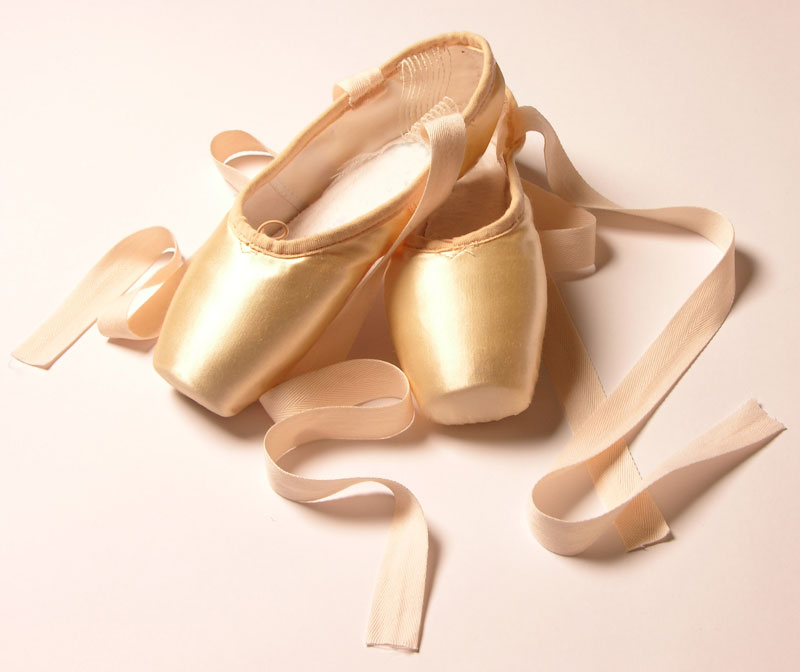
Ballet-Pointe-ShoesBallet has always been my favorite form of dance.  When I was a little girl, it made me feel like a princess, and as I got older, the grace and beauty that I saw made me want to be just like Suzanne Farrell, Julie Kent, Darcey Bussell, and Sylvie Gulliem.  Suzanne Farrell was my favorite ballerina which is probably why I have a soft spot for the New York City Ballet.  I was lucky enough to take class from her during a Paul Taylor Dance Intensive and she was one of the most inspirational people I have ever had the privilege to learn from in a classroom.  Her expressionism and the way she describe movement and music when we were learning excerpts from Paul Taylor’s ‘Airs’ was like listening to a fairytale.  She had a way of describing a dance like it was a story and that as dancers we need to dive into the work mind, body, and soul because if we didn’t the audience would not engage.  I think Ballet teaches dancers to have this type of attitude in the classroom, and it continues to carry over to other styles of dance as well as on stage as young dancers grow as artists.

Now as an adult and teaching ballet to students three to nine years old, I am working on instilling those same thoughts and mind-sets to my students.  I have taught all ages of students over the years, but having students from the beginning of their ballet days is the perfect opportunity to mold new dancers to have the correct habits from the right form of technique to the mind-set of dedication, discipline, and determination.  Teaching kids can be hard.  All they want to do is run around and yell since their attention span is two seconds.  I have learned that you have to turn everything into a game and use descriptive words that relate to animals or images that they know.

There is one girl who is nine that I have been teaching for the last four years and it is amazing how her technique has grown from her turning ability, the strength of her balances, and the way she carries her balletic style.  She has now started taking tap and jazz classes with me this year, and through ballet she has developed the skills to catch on quickly to new movement, knows the importance of her shifting weight, and  brings confidence when she is learning new steps.

I wish I could say that I came to the importance of ballet when I was a kid, but I can honestly tell you that I didn’t really understand the importance of ballet until college.  My biggest suggestion to every dancer out there is to never stop taking ballet.  It gives you the skills such as a strong core, arms, and legs as well as develops a support system within your body that can carry into other styles.  No matter how hard a ballet class is, as a dancer you need to fight everyday to be better.  Ballet makes you do the impossible, and with practice, makes the viewer think that the movement is possible by anyone.  So fight for that better balance, that longer arabesque, or that perfect pirouette.  Take a ballet class at least once a week and if you can’t afford it, give yourself one by taking a video or a book out of the library, or find someone you know and give each other class.  In the words of Suzanne Farrell, “You don’t learn from a situation where you do something well. You enjoy it and you give yourself credit, but you don’t really learn from that. You learn from trial and error, trial and error, all the time.”

Girl Power!

If you haven’t noticed, I love to highlight women who have made a mark on society in music and dance.  There have been many women who have created a legacy, changed the world for future generations, and developed magic for others to experience everyday.  International Women’s Day was on March 8th, but in my opinion everyday is Women’s Day!

Pop music is one of my favorite music genres.  It has broken boundaries and changed over decades, but one thing that hasn’t changed is the harmonizing quality girl groups have incorporated into their sound.  Starting in the late 1930s when the Andrews Sisters changed the music scene and the up-and-coming popularity of girl groups began.  In 1955 was the year that girl groups started to grow.  In 1960-1966 over 750 girl groups charted songs in the United States and the United Kingdom.

While listening to girl groups over the decades, I came across a group called “The Chantels” which was formed in the 1950s.  No words can express how excited I was to find this group.  I have a weird obsession with my name that date backs to when I was a kid.  When you don’t have a common name, you can never find cool things with your name on them.  Having a younger brother who has the most common name to man I was jealous.  Anyways, this girl group was revolutionary since it was the second African American girl group to have success after the Bobbettes.  Their first song to hit the billboard charts was “He’s Gone,” but their most popular hit was “Maybe.”  Many of the girl groups such as the Chantels, the Bobbettes, the Shirelles, and the Marvelettes have that doo-wop groove including the harmonized vocals, the simple instrumentations, and those claps that help to keep the rhythm tied together.

Jumping a few decades to the 1990s through to today, girl groups still have a hold in popular music.  During the 90s the sound of girl groups changed.  TLC brought a contemporary R&B sound to groups.  The harmonies were still there, but the style had more of an edge.  After TLC, one of the top selling girl groups ever hit the scene, the Spice Girls.  The Spice Girls is not only embedded in my childhood, but they were the women who taught the 90s generation about girl power and how important friendship is to your life.  Emma, Victoria, Mel B., Mel C., and Geri created a huge fandom and their legacy still lives on in popularity as the best selling girl group ever.  Their mix of dance party type songs like ‘Wannabe’ and ‘Spice Up Your Life’ to their soft ballads ‘2 Become 1’ and ‘Say You’ll Be There’ resinated with the 90s generation connecting their music to life.  The girl groups continue through today with the up-and-coming group Fifth Harmony who have some of the most amazing voices together.  Their vocal range, projection power, and instrumental simplicity to highlight their voices is something exhibits true talent.

In the US, we rarely see artists from foreign speaking countries (besides EDM) in the general popular music scene, but girl groups are huge in Japan (J-Pop) and South Korea (K-Pop) and have hit the music scene hard in the late 2000s with some catchy dance club tunes which include artists Morning Musume, 2NE1, and Girl Generation.  These girl groups bring in techno sounds of EDM, the R&B edge and rap style that TLC had back in the 90s, and power vocals such as Fifth Harmony and Little Mix.  This sound is going to continue to blow up especially now that EDM is hitting the pop scene with artists like Zedd working with numerous female vocalists such as Selena Gomez and Ariana Grande.

Watch out One Direction, Rixton, and The Wanted the girls are coming for your music crown and I think they have the power to take over.  Click here for a list of girl groups that have affect the music scenes from the 1930s through today, and celebrate the power of women everyday.

*All date information found through wikipedia.

Dana Wilson – Superwoman to Commercial Dance

Dana-WilsonMany pop music videos and stadium tours have back up dancer who are amazing at what they do from partnering to hip hop stylized dance routines, and in my opinion steal the show.  Dana Wilson is one of those dancers.  She has worked on every avenue of commercial dance including television, film, commercials, international music tours, and music videos.  Some of her most notable work includes dancing with pop superstars Joe Jonas, Brittney Spears, Justin Beiber, Backstreet Boys, Earth, Wind, & Fire, and Justin Timberlake.  She is not only a dancer but has gotten bitten by the choreography bug and has assisted with Justin Timberlake’s World Tour “Future, Sex…” with Marty Kudelka, So You Think You Can Dance Season 5 with Joey Dowling, and Cirque Du Soleil with Wade Robson.

This multitalented dancer and choreographer is not only an artist, but she has brought the dance world to a new level where dancers need to start thinking about their long term futures.  Back when I was finishing undergraduate school with a bachelors degree in dance I was full of excitement.  I wanted to start my own dance company and create this amazing legacy.  After working on the business side of a dance company for almost four years and going to graduate school for arts administration I learned that their are so many other problems in the American dance world that need to be address such as health insurance, retirement plans, and life stability.  I didn’t like the instability that I saw my friends suffering from living from contract to contract, barely being able to pay their rents, and in some cases just surviving, which is why I started working on the business side of the arts industry; I wanted to do something more for the artists and dance companies by developing a more stable environment.

I feel that Wilson is like me to some extent in fighting for the artists.  Wilson started to fight for those rights through the “It’s About Time” campaign back in 2012 when SAG-AFTRA was fighting for performer’s rights in music videos.  In June 2012, SAG-AFTRA (Screen Actors Guild –  Amercian Federation of Television and Radio Artists) and major record labels (Universal Music Group, Sony Music Enterainment, Warner Music Group, EMI Music, and Walt Disney Company) reached a deal for performers on music videos which included amenities such as minimum daily rates, safety protection and additional compensation for hazardous performances, rest periods, improved auditions conditions such as shelter, start time, and auditions times not being more than four hours.  Durning the negotiation process dancer and SAG-AFTRA member Dana Wilson and friends discussed some of their horror stories such as not getting paid for months for the work that was done in the video, the horrible conditions dancers were given during video shoots such as being out in the elements, no food or meal breaks, no health care benefits, and not having contracts for work that was done the videos.  My motto – get everything in writing.  In any type of business you are working in verbal agreements only go so far, it is always best to get anything that is agreed upon in writing.

For Wilson, creating union contracts for music videos was just the first step in getting more stability for dancers and she took it one step further.  Music tours are some of the most sot after work for dancers.  What dancer doesn’t want to be on tour for sometimes over a year traveling the world and getting paid for doing something they love?  The downside to most tours is there is usually no union contract, and the dancers usually lose their SAG-AFTRA union benefits while on tour, which includes a commercial dancer’s health insurance and retirement plan.  Before Justin Timberlake’s 20/20 Experience World Tour, Wilson got busy with other SAG-AFTRA members which came to a Touring Agreement under unionize contract where performers earnings went towards health insurance and retirement plans.  It is amazing how few tours have unionized dancer contracts considering the ware and tear on your body as a dancer, sometimes dancing on dangerous materials such as concrete, plexiglass, wood, or metal.  It is important as a dancer to take a care and protect your body, and these unionized contracts are another form of protection if a dancer is injured on tour.

Dana Wilson is superwoman to me.  She has created a domino effect that I hope will continue to drive dancers to become more business minded.  As a dancer you need to treat yourself as a business.  Take advantage of every opportunity even if that opportunity may not be as obvious such as supporting endeavors of other artists, getting involved in changing the dance scene from not only an artistic aspect, but a thinking and business aspect, as well as become strong by knowing what you believe to be equal rights and opportunities of present and future dancers.  Sometimes you have to push the envelope to make change.  No one said it would be easy, but it will always be worth it.

Check out sagaftra.org!

Should FM/AM Radio be Paying to Play Music?

Radio-mic-imageLegal and by the book mumbo jumbo has always resinated with me.  I like being in control, having the ability to plan for mistakes as well as having the time to fix them without being in emergency mode.  It drives me nuts when people don’t look at the long term affects when making decisions.  Thinking twenty to thirty years out when making a major decision is key to making that decision a smart one.  Will that decision always be successful?  Absolutely not, but at least you can see where and why it went wrong.

Recently, I was reading in Billboard Magazine that the government is in the process of making changes to the copyright laws for music.  One of the topics that are up for discussion is if FM/ AM radio stations should have to pay royalities to play music on the radio.  As I read this, I thought this could potentially bring in another revenue stream for the artists and record labels from the continuing declining music sales, but couldn’t it also hurt the artists and record companies long term?

Record labels and artists usually do some type of radio tour to promote music that they have coming out.  During those radio promotional tours the radio stations will be playing said music all week in preparation for the artist to be in the studio.  This not only promotes to listeners throughout the day to tune in on said day that the artist will be in the studio, but it gives the labels and artists a continuing roll of publicity throughout the week.  Will the radio station be charged for playing the artist’s music during the promotional week to gain listeners?  If the station is charged with a fee every time the artist’s song is played during that week what incentive does the radio station have to play their music instead of just doing a verbal promotional plug?  This could decrease the amount of air time artists could be receiving during a heavy promotional time when labels are pushing fans to buy tickets for tour dates.

The independent promotors (i.e. the indies) who are paid by the labels to get station managers to add particular artists to their playlists could increase their fees.  In turn the station mangers who make arrangements with the indies could request a higher annual sum to play said artists.  I know it’s illegal for stations to accept money to play music, but I’m talking about the promotional support the stations are given by the indies such as gift cards, give away money, and trips to utilize for game prizes on the station.

Finally, four companies own 62% of the top 40 market (according to musicbiz.com).  This could create more wide spread playlists so the radio stations wouldn’t half to pay as much in royalties to one artist or one label, which could create a greater chance for more artists to get radio play time.  This could change the top 40 game since radio is key factor in getting music heard by the general public.  I know what the generation Z is going to say “who listens to the radio when we have iPods, streaming, and YouTube?”  Those adults that sit in traffic going to work still listen to the radio, or the millennial generation who have their favorite talk show hosts that have introduced them to new music since the late 90s such as Ryan Seacrest and Elvis Duran.  What about people who listen to stations for the give aways?  Radio stations have power to get music heard around the world through promotional tools.

I think the royalties would be great as another revenue sources for the artists, but I also think it is a double edge sword.  It could cause increases in fees for not only the labels which in turn could affect what the artists actually receive, as well as increase fee requests from the indies and station managers.  What do you think?  Is this potential change a catch 22 for the artists and the labels, or is it a partial solution to the decreasing sale revenue?


Performance Nerves and How to Deal

elephantStanding in the wings of the stage, your stomach in knots, and adverting your eyes at all cost from the stage of the dancer performing before you.  Performing can be terrifying and exilirating feeling and the nerves can get the better of any dancer.  So how does anyone stay calm among all the pressure?  Just like sport athletes and their obsession with their favorite socks, shorts, or underwear, every performer has weird qwarts such as having objects that need to be with them on performing days or daily and evening routines.  Anytime I performed in my high school and college days I had five life hacks that always brought my blood pressure back down.

1.  A Stuffed Elephant – I got this stuffed animal when I was sixteen years old from my solo instructor Lisa.  She was one of my biggest supporters growing up as a dancer.  Always had my back at every competition and performance even when she was no longer teaching me.  When she gave it to me it said, “break a leg and remember an elephant never forgets.”  I carried this thing everywhere with me and it is a little embarrassing to say that I even had it in my bag at my college dance performances and choreography showings.

2.  During the late 90s and early 00s portable disk players and tape Walkmans were the iPod of the day.  I had my Walkman with me and before I had to perform I would be listening to the music over and over again to the point where I knew every sound in the music and what sound matched the movement.  A little OCD I know, but what performer doesn’t have a type-A personality?

3.  The three minutes before you are suppose to go on is the longest three minutes of your life!  You try not to look at the stage because if you watch the other dancer and he/ she is great you basically sabotage yourself and if he/ she doesn’t have the greatest performance you get cocky and in turn sabotage yourself.  So, I would go to the farthest part of the wing backstage and jump up and down, stretch my feet, shake my arms….basically do anything that kept me moving and focused so I didn’t look at the stage.

4.  BREATH – It sounds simple.  Breathing is a natural part of a human’s life, but sometimes when a sea of lights hit your body on an empty stage, you have three people judging your dancing ability, and their are thousands of other eyes in the audience watching your every move you can be overcome with a feeling of fear that can paralyze you.  The moment I stepped on a stage I would take a deep breath to make my breathing consistent and as the music begin I would release that breath which would send a calming effect through my entire body.

5.  And finally, avoid physically doing the dance before you get on stage.  Sure practice the hard parts such as that double pirouette to an extension or that switch leap.  When I was younger I had an obsession with trying to run the dance over and over again and by the time I got to the stage I would start to get movement phrases confused or forget parts.  As I got older I realized that running it was creating a mental block by the time I hit the stage.  Trust yourself and your muscle memory.

You are not alone in your nerves.  Performing takes practice and continuing to push yourself to the stage is the only way to master it.  As Taylor Swift said, “Being fearless isn’t being a hundred percent not fearful, it’s being terrified but you jump anyways.”