Ballet – The Best Form of Dance

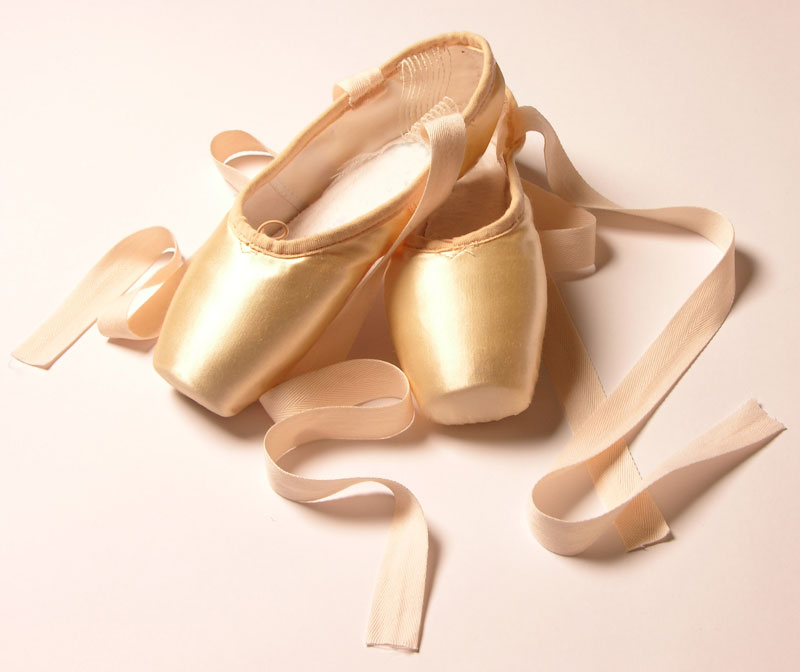
Ballet-Pointe-ShoesBallet has always been my favorite form of dance.  When I was a little girl, it made me feel like a princess, and as I got older, the grace and beauty that I saw made me want to be just like Suzanne Farrell, Julie Kent, Darcey Bussell, and Sylvie Gulliem.  Suzanne Farrell was my favorite ballerina which is probably why I have a soft spot for the New York City Ballet.  I was lucky enough to take class from her during a Paul Taylor Dance Intensive and she was one of the most inspirational people I have ever had the privilege to learn from in a classroom.  Her expressionism and the way she describe movement and music when we were learning excerpts from Paul Taylor’s ‘Airs’ was like listening to a fairytale.  She had a way of describing a dance like it was a story and that as dancers we need to dive into the work mind, body, and soul because if we didn’t the audience would not engage.  I think Ballet teaches dancers to have this type of attitude in the classroom, and it continues to carry over to other styles of dance as well as on stage as young dancers grow as artists.

Now as an adult and teaching ballet to students three to nine years old, I am working on instilling those same thoughts and mind-sets to my students.  I have taught all ages of students over the years, but having students from the beginning of their ballet days is the perfect opportunity to mold new dancers to have the correct habits from the right form of technique to the mind-set of dedication, discipline, and determination.  Teaching kids can be hard.  All they want to do is run around and yell since their attention span is two seconds.  I have learned that you have to turn everything into a game and use descriptive words that relate to animals or images that they know.

There is one girl who is nine that I have been teaching for the last four years and it is amazing how her technique has grown from her turning ability, the strength of her balances, and the way she carries her balletic style.  She has now started taking tap and jazz classes with me this year, and through ballet she has developed the skills to catch on quickly to new movement, knows the importance of her shifting weight, and  brings confidence when she is learning new steps.

I wish I could say that I came to the importance of ballet when I was a kid, but I can honestly tell you that I didn’t really understand the importance of ballet until college.  My biggest suggestion to every dancer out there is to never stop taking ballet.  It gives you the skills such as a strong core, arms, and legs as well as develops a support system within your body that can carry into other styles.  No matter how hard a ballet class is, as a dancer you need to fight everyday to be better.  Ballet makes you do the impossible, and with practice, makes the viewer think that the movement is possible by anyone.  So fight for that better balance, that longer arabesque, or that perfect pirouette.  Take a ballet class at least once a week and if you can’t afford it, give yourself one by taking a video or a book out of the library, or find someone you know and give each other class.  In the words of Suzanne Farrell, “You don’t learn from a situation where you do something well. You enjoy it and you give yourself credit, but you don’t really learn from that. You learn from trial and error, trial and error, all the time.”

Dana Wilson – Superwoman to Commercial Dance

Dana-WilsonMany pop music videos and stadium tours have back up dancer who are amazing at what they do from partnering to hip hop stylized dance routines, and in my opinion steal the show.  Dana Wilson is one of those dancers.  She has worked on every avenue of commercial dance including television, film, commercials, international music tours, and music videos.  Some of her most notable work includes dancing with pop superstars Joe Jonas, Brittney Spears, Justin Beiber, Backstreet Boys, Earth, Wind, & Fire, and Justin Timberlake.  She is not only a dancer but has gotten bitten by the choreography bug and has assisted with Justin Timberlake’s World Tour “Future, Sex…” with Marty Kudelka, So You Think You Can Dance Season 5 with Joey Dowling, and Cirque Du Soleil with Wade Robson.

This multitalented dancer and choreographer is not only an artist, but she has brought the dance world to a new level where dancers need to start thinking about their long term futures.  Back when I was finishing undergraduate school with a bachelors degree in dance I was full of excitement.  I wanted to start my own dance company and create this amazing legacy.  After working on the business side of a dance company for almost four years and going to graduate school for arts administration I learned that their are so many other problems in the American dance world that need to be address such as health insurance, retirement plans, and life stability.  I didn’t like the instability that I saw my friends suffering from living from contract to contract, barely being able to pay their rents, and in some cases just surviving, which is why I started working on the business side of the arts industry; I wanted to do something more for the artists and dance companies by developing a more stable environment.

I feel that Wilson is like me to some extent in fighting for the artists.  Wilson started to fight for those rights through the “It’s About Time” campaign back in 2012 when SAG-AFTRA was fighting for performer’s rights in music videos.  In June 2012, SAG-AFTRA (Screen Actors Guild –  Amercian Federation of Television and Radio Artists) and major record labels (Universal Music Group, Sony Music Enterainment, Warner Music Group, EMI Music, and Walt Disney Company) reached a deal for performers on music videos which included amenities such as minimum daily rates, safety protection and additional compensation for hazardous performances, rest periods, improved auditions conditions such as shelter, start time, and auditions times not being more than four hours.  Durning the negotiation process dancer and SAG-AFTRA member Dana Wilson and friends discussed some of their horror stories such as not getting paid for months for the work that was done in the video, the horrible conditions dancers were given during video shoots such as being out in the elements, no food or meal breaks, no health care benefits, and not having contracts for work that was done the videos.  My motto – get everything in writing.  In any type of business you are working in verbal agreements only go so far, it is always best to get anything that is agreed upon in writing.

For Wilson, creating union contracts for music videos was just the first step in getting more stability for dancers and she took it one step further.  Music tours are some of the most sot after work for dancers.  What dancer doesn’t want to be on tour for sometimes over a year traveling the world and getting paid for doing something they love?  The downside to most tours is there is usually no union contract, and the dancers usually lose their SAG-AFTRA union benefits while on tour, which includes a commercial dancer’s health insurance and retirement plan.  Before Justin Timberlake’s 20/20 Experience World Tour, Wilson got busy with other SAG-AFTRA members which came to a Touring Agreement under unionize contract where performers earnings went towards health insurance and retirement plans.  It is amazing how few tours have unionized dancer contracts considering the ware and tear on your body as a dancer, sometimes dancing on dangerous materials such as concrete, plexiglass, wood, or metal.  It is important as a dancer to take a care and protect your body, and these unionized contracts are another form of protection if a dancer is injured on tour.

Dana Wilson is superwoman to me.  She has created a domino effect that I hope will continue to drive dancers to become more business minded.  As a dancer you need to treat yourself as a business.  Take advantage of every opportunity even if that opportunity may not be as obvious such as supporting endeavors of other artists, getting involved in changing the dance scene from not only an artistic aspect, but a thinking and business aspect, as well as become strong by knowing what you believe to be equal rights and opportunities of present and future dancers.  Sometimes you have to push the envelope to make change.  No one said it would be easy, but it will always be worth it.

Check out sagaftra.org!

Performance Nerves and How to Deal

elephantStanding in the wings of the stage, your stomach in knots, and adverting your eyes at all cost from the stage of the dancer performing before you.  Performing can be terrifying and exilirating feeling and the nerves can get the better of any dancer.  So how does anyone stay calm among all the pressure?  Just like sport athletes and their obsession with their favorite socks, shorts, or underwear, every performer has weird qwarts such as having objects that need to be with them on performing days or daily and evening routines.  Anytime I performed in my high school and college days I had five life hacks that always brought my blood pressure back down.

1.  A Stuffed Elephant – I got this stuffed animal when I was sixteen years old from my solo instructor Lisa.  She was one of my biggest supporters growing up as a dancer.  Always had my back at every competition and performance even when she was no longer teaching me.  When she gave it to me it said, “break a leg and remember an elephant never forgets.”  I carried this thing everywhere with me and it is a little embarrassing to say that I even had it in my bag at my college dance performances and choreography showings.

2.  During the late 90s and early 00s portable disk players and tape Walkmans were the iPod of the day.  I had my Walkman with me and before I had to perform I would be listening to the music over and over again to the point where I knew every sound in the music and what sound matched the movement.  A little OCD I know, but what performer doesn’t have a type-A personality?

3.  The three minutes before you are suppose to go on is the longest three minutes of your life!  You try not to look at the stage because if you watch the other dancer and he/ she is great you basically sabotage yourself and if he/ she doesn’t have the greatest performance you get cocky and in turn sabotage yourself.  So, I would go to the farthest part of the wing backstage and jump up and down, stretch my feet, shake my arms….basically do anything that kept me moving and focused so I didn’t look at the stage.

4.  BREATH – It sounds simple.  Breathing is a natural part of a human’s life, but sometimes when a sea of lights hit your body on an empty stage, you have three people judging your dancing ability, and their are thousands of other eyes in the audience watching your every move you can be overcome with a feeling of fear that can paralyze you.  The moment I stepped on a stage I would take a deep breath to make my breathing consistent and as the music begin I would release that breath which would send a calming effect through my entire body.

5.  And finally, avoid physically doing the dance before you get on stage.  Sure practice the hard parts such as that double pirouette to an extension or that switch leap.  When I was younger I had an obsession with trying to run the dance over and over again and by the time I got to the stage I would start to get movement phrases confused or forget parts.  As I got older I realized that running it was creating a mental block by the time I hit the stage.  Trust yourself and your muscle memory.

You are not alone in your nerves.  Performing takes practice and continuing to push yourself to the stage is the only way to master it.  As Taylor Swift said, “Being fearless isn’t being a hundred percent not fearful, it’s being terrified but you jump anyways.”

Bringing Dance to Life On the Big Screen

Like every sibling relationship, my younger brother and I have the ability to say something and know exactly what the other person is talking about.  Normally because it is a quote from a movie.  Anytime I watch a movie I always find something new that I didn’t see before whether it is a moment between characters that I missed, a line that is insanely funny that I didn’t connect to before, or a heart stopping quote that makes everything finally tie together.  Dancing in a movie can do that without saying one word.  Usually dancing in movies go hand in hand with it being some type of musical, unless it is specifically about dance like “Center Stage” or “Step Up,” but I am not talking about dance focused movies.  I want to talk about movies that have dance in them that make you feel something so powerful that you can’t help but fall in love with the story, the characters, and the inevitable plot twists that the director takes you on.

Over the last thirty years, dance sequences have popped up in movies periodically, but not consistently, which has to do with cost of the choreographer(s) and the dancers, the ability to find the right type of dancer(s)/ actor(s), and the various types of film shots that need to be taken when capturing a dance sequence so you can record the right type of emotion for the viewer.  Needless to say, you need a talented director and one that knows something about dance.  So what makes a movie a success?  Does dance in movies help to sell the film, or is it an added expense that not only increases the production budget but has a large potential to fail as a blockbuster?

Kenny Ortega is an American choreographer and director most notably known for his work on the ‘High School Musical’ trilogy and the 1992 film, ‘Newsies.’  He has a choreographic style that stands out from his strategic layout of group dances in songs such as ‘We’re All in This Together’ and ‘Seize the Day’ to his ability to choreograph for the camera by utilizing movements that are explosive such as chaînés leaps and pirouette extensions.  Ortega has a way of connecting his choreography with the storyline so it doesn’t seem like the dancing is coming out of no where mixing fantasy with reality through film shots and dance sequences.  For example, in High School Musical 3 during the song ‘Can I Have This Dance’ he blends the asking of a proposal to the prom that has the perfect theme of the waltz and as the two characters sing they waltz and partner throughout the roof of the school.  The director goes from quick feet views to full body circular movement of the camera to a high view of the characters during the partner lifts.  This gives the audience an inside view through each waltz to the emotions that the characters are feeling through a simple touch or a partner lift.  The High School Musical trilogy hit big after the first television release in 2006 so by the time HSM3 came out in 2008 Disney had the budget to do a theatrical production.  The fans pushed the popularity of this made for television story that skyrocketed the careers of the people who worked on these films from the actors such as Zac Eron to the choreographers Ortega, Bonnie Story, and Charles Klapow.  ‘Newsies’ didn’t have the greatest response when it first came out in 1992, but it has some great choreography in it.  For example, the song ‘King of New York’ where not only is there jazz, but also a mix of tap moves such as shuffles, scuffs, and toe hop barrels.  It’s rare to see two different styles mixed within one number.  Having a two drastically different types of dance styles in a number can create difficulty when searching for dancers who are trained in those styles; that is why as a dancer it is always good to be versatile.

I still haven’t figured out what makes a blockbuster hit movie.  I think it’s more like gambling.  Some film productions get a smaller marketing and production budget and then the fans blow up the popularity of it like with High School Musical, where other movies get a larger production budget but not enough marketing is done for it or it doesn’t resinate with the current generation that is being targeted such as ‘Newsies.’  Either way, movie studios bring on the dance because society is ready to be taken on a new ride that doesn’t always have to be capped superheroes and gore.

Dance Moms – Where to Begin…

Where do I start about dance moms, and no I do not mean the TV show.  Anyone who is a dance instructor knows all about the types of mothers and/ or fathers that are over barring and think their kids are the next Sylvie Guillem or Mikhail Baryshnikov.  Don’t get me wrong, I think parents should be supportive and take an interest in their children’s hobbies, but when you come into my classroom and are yelling at your five year old to pay attention, it is neither productive or helpful.  There are two types of parents, “parents who want their kids to be a dancer,” I’ll call these parents “forceful parents” and “helicopter parents.”  These parents may sound like their the same, but personally I think the helicopter parent is worse.

First you have the “forceful parents.”  These parents makes their kid take dance class even though they do not want to be there.  For example, lets say you have a daughter named Lucy.  Every time she steps into ballet class she cries, or she sits in the corner and pouts until it’s time to go home.  Not only does this disrupt the class, but Lucy is not having fun because she doesn’t want to be there.  Now you may wonder why I call these parents “forceful parents.”  Anytime I have a conversation with these types of parents they always tell me how they wished they were in dance classes when they were little or as an adolescent and they want to be able to give their child that experience.  Newsflash – Your kid hates it and doesn’t want to be there.  Lucy would rather be in soccer.  Want to know how I know that?  Because I asked her.

Second you have the ‘helicopter parents.”  Helicopter parents are those parents that are trying to give their kid an edge in someway.  Whether it is becoming buddy buddy with the dance studio owner or the instructor so your kid gets a good part or taking the blame when your kid forgets something of vital importance for a competition and you expect another kid to give up theirs because their child has a bigger part in the dance piece.  Dear helicopter parents, your kids are going to become the most dependent babies and/ or continue to make stupid mistakes their entire lives because you have never let them fall flat on their face.  Without failure their is no learning process.

My parents were supportive people in any thing we did.  They had three very different children, one that was into music, one that was obsessed with baseball, and me – the type A personality that had to have control of everything all the time dance fanatic.  While we were growing up, my parents were firm believers that kids needed to learn to fight their own battles at an early age, which is why when something was unfair at an activity we were involved with they stayed out of it and let us handle it in our own way.  My parents were also the type of people to ask us if we were still interested in an activity at a young age.  We were never allowed to quit something in the middle of a season or year, we always had to finish the activity out.  Your children are smarter than you think.  Let them be involved in the decision on whether or not they want to be in dance class and don’t be so involved that they never fail at that activity, your children need to learn and grow, and the only way to do that is with failure.  As the saying goes if you have never failed than you have never succeeded.